Photo: USA International Trade Administration, public domain, via Wikimedia Commons
Berkshire Hathaway's Form 13F is the most closely watched institutional filing in the US market, and 2026 changed what it represents. Greg Abel became CEO on January 1, 2026, and Warren Buffett stepped down as chairman on September 18, 2026, becoming chairman emeritus while staying on the board (Berkshire Hathaway press release, 2026-09-18). The Q1 and Q2 2026 filings covered here are the first two Abel submitted as CEO.
Calling this filing "Buffett's portfolio" is now wrong in two ways. First, Abel wrote in his 2026 shareholder letter that he oversees about 94% of the equity portfolio and Ted Weschler about 6%. Second, a 13F only lists US-listed equities, so Berkshire's Treasury bills, its Japanese trading-house stakes and its wholly owned businesses never appear in it. This post uses figures tallied directly from the SEC filings to separate what changed, what stayed the same, and what the filing cannot tell you.
How we counted: every holding figure here comes from the raw 13F-HR information tables downloaded from SEC EDGAR. Rows for the same security and share class were summed, and prior-quarter share counts were adjusted for stock splits before comparison. The filings used are Q2 2026 (accession 0001193125-26-352200, filed 2026-08-14) and Q1 2026 (0001193125-26-226661, filed 2026-05-15), CIK 1067983. Both cover pages state that no holdings were omitted under confidential treatment.
What Berkshire's 13F Does and Does Not Cover
Form 13F is filed within 45 days of each quarter end by institutional managers with at least $100 million in Section 13(f) securities (SEC, Form 13F FAQ). Berkshire adds one limitation of its own on top of the usual ones.
The last row is specific to Berkshire, which also allocates capital by buying whole companies. The OxyChem purchase completed on January 2, 2026 (about $9.7 billion) and the Taylor Morrison deal completed on July 24, 2026 (about $6.8 billion in equity value) were both large capital decisions, and neither shows up as a single line in the 13F.
Mind the lag as well. The Q2 filing shows Berkshire's position on June 30, 2026, disclosed on August 14. As of this writing on October 8, 2026, that snapshot is 100 days old and Q3 has already ended. The Q3 filing is due November 16, 2026.
How the Reported Portfolio Changed Quarter to Quarter
Lined up on the same basis, Q1 2026 stands apart from the quarters around it.
Source: our tally of SEC EDGAR 13F-HR information tables. Positions are counted per security, so Alphabet Class A and Class C count separately.
Reported value rose 13.7% in Q2. That is not a return figure. A 13F total mixes price moves with buying and selling, and Q2 had both: a large Alphabet purchase, and Apple's quarter-end price rising from about $254 to about $289 (reported value divided by shares).
Berkshire's 10-Q adds the cash view. In Q2 it bought $23.47 billion of equities and sold $3.69 billion. In Q1 it bought $15.94 billion and sold $24.09 billion, a net sale (Berkshire Q2 2026 Form 10-Q). Reuters reported that the Q2 net purchase ended a 14-quarter run of net selling. The 10-Q totals include Japanese stock purchases that the 13F does not list, so the two sources do not reconcile exactly.
Q2 2026 Top Holdings
Here are the top 10 issuers as of June 30, 2026, with Alphabet's Class A (GOOGL) and Class C (GOOG) combined.
| Rank | Stock | Shares | Reported value | Weight | vs. prior quarter |
|---|---|---|---|---|---|
| 1 | AppleAAPL | 227,917,808 | $65.95B | 22.04% | Unchanged |
| 2 | American ExpressAXP | 151,610,700 | $51.28B | 17.14% | Unchanged |
| 3 | Alphabet (A+C)GOOGL | 105,979,600 | $37.77B | 12.62% | Shares +83.2% |
| 4 | Coca-ColaKO | 400,000,000 | $32.51B | 10.86% | Unchanged |
| 5 | Bank of AmericaBAC | 483,394,015 | $27.54B | 9.20% | Shares −5.9% |
| 6 | ChevronCVX | 84,375,856 | $13.99B | 4.67% | Unchanged |
| 7 | Occidental PetroleumOXY | 264,941,431 | $12.87B | 4.30% | Unchanged |
| 8 | ChubbCB | 34,249,183 | $11.67B | 3.90% | Unchanged |
| 9 | Moody'sMCO | 24,669,778 | $11.17B | 3.73% | Unchanged |
| 10 | Kraft HeinzKHC | 325,634,818 | $7.69B | 2.57% | Unchanged |


Source: SEC EDGAR, Berkshire Hathaway 13F-HR (filed 2026-08-14, report date 2026-06-30).
The top 10 make up 91.0% of reported value and the top five 71.9%. Berkshire holds 26 issuers, but five of them carry most of the weight. At his first annual meeting as CEO on May 2, 2026, Abel called Apple, American Express, Coca-Cola and Moody's the "core four," and not one share of any of them changed in Q2.
Kraft Heinz, at No. 10, is also unchanged. On January 20, 2026, Kraft Heinz filed to register the possible resale of Berkshire's 325.44 million shares, a 27.5% stake (Reuters via MarketScreener, 2026-01-20). Preparing to sell is not the same as selling, and no sale shows up as of June 30.
Q1 2026: Sixteen Exits in One Quarter
In Abel's first quarter as CEO, Berkshire fully exited 16 positions. In the five prior quarters it had exited one to three per quarter.
| Exited stock | Shares at 2025 year-end | Value at 2025 year-end |
|---|---|---|
| VisaV | 8,297,460 | $2.91B |
| MastercardMA | 3,986,648 | $2.28B |
| UnitedHealthUNH | 5,039,564 | $1.66B |
| Domino's PizzaDPZ | 3,350,000 | $1.40B |
| AonAON | 3,602,995 | $1.27B |
| Pool Corp.POOL | 3,068,885 | $0.70B |
| AmazonAMZN | 2,276,000 | $0.53B |


Source: our tally of 13F-HR filings for 2025-12-31 and 2026-03-31. The other nine exits were each worth $0.33 billion or less: Heico, Liberty Media, Charter Communications, Lamar Advertising, Allegion, Diageo, Liberty Latin America (two share classes) and the Atlanta Braves.
Together, the 16 exited positions were worth about $11.9 billion at the end of 2025, or 4.3% of the 13F total then. So while the position count fell from 42 to 29, the portfolio's center of gravity barely moved. The edges changed and the core stayed put.
The filing does not say who made these calls. Todd Combs, one of Berkshire's investment managers, left for JPMorgan on December 8, 2025 (Axios, 2025-12-08), and Reuters reported that most Q1 sales were likely directed by Abel after he took over Combs' former portfolio. A 13F does not break holdings out by manager, so that is a reported interpretation, not something the filing confirms.
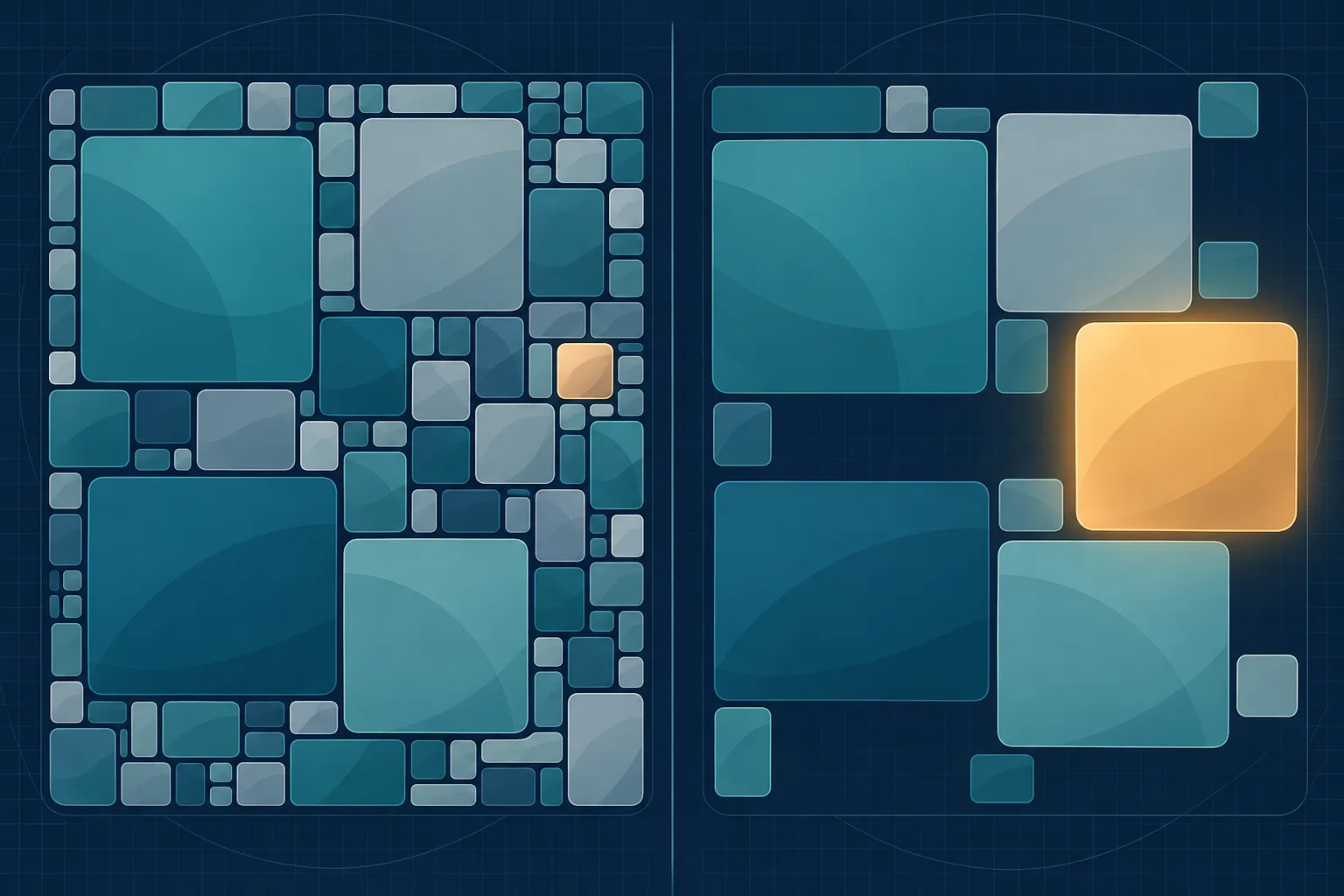
New money came in the same quarter. Berkshire opened a 39,809,456-share Delta Air Lines position ($2.65 billion) and raised Alphabet Class A from 17.85 million to 54.25 million shares. It cut Chevron 35.2%, from 130.16 million to 84.38 million shares, and reduced Constellation Brands from 13 million to 0.63 million shares before exiting it entirely in Q2.
Alphabet: From First Purchase to No. 3 in Three Quarters
Alphabet is the biggest change across these two quarters. It first appeared in the Q3 2025 filing and has grown in each quarter since.
Source: our tally of SEC EDGAR 13F-HR information tables.
Much of the Q2 increase traces to a direct deal with the company rather than open-market buying. In a June 1, 2026 SEC filing, Alphabet said it had agreed to sell Berkshire $5 billion of Class A stock at $351.81 a share and $5 billion of Class C stock at $348.20 a share in a private placement (Alphabet SEC filing, 2026-06-01). Dividing dollars by price gives about 14.21 million Class A and 14.36 million Class C shares, roughly 59% of the 48.14 million shares Alphabet added in Q2. The 13F alone cannot confirm whether all placement shares were delivered before June 30.
On who drove the idea, Reuters reported that Buffett told CNBC the Alphabet investment was his (Reuters via Investing.com, 2026-08-14). Read next to Abel's 94% figure, it shows that the person managing a position and the person who proposed it are not necessarily the same.
Chart data
Chart summary: Alphabet Class A (GOOGL) daily candles, 2025-07-01 to 2026-06-30. Close 175.84 USD → 357.37 USD (+103.2%); period high 408.61 (2026-05-18), low 172.77 (2025-07-09). Marked: Placement $351.81 2025-07-01 close 175.84, Q3'25 2025-09-30 close 243.10, Q4'25 2025-12-31 close 313.00, Q1'26 2026-03-31 close 287.56, Deal 2026-06-01 close 376.37, Q2'26 2026-06-30 close 357.37.
Two observations are worth keeping. First, Berkshire did not buy Alphabet all at once; it built the position over three quarters. Second, in Q2 it added 83.2% more shares while the quarter-end price rose from about $288 to about $357. Because a 13F carries no purchase dates or prices, it cannot show whether those adds were made while the existing position was in profit.
Apple and Bank of America: Two Trims That Diverged
Berkshire's two biggest long-term holdings started shrinking around the same time, then went separate ways in 2026.
Source: our tally of SEC EDGAR 13F-HR information tables.
Apple fell 75%, from 915.56 million shares in Q3 2023 to 227.92 million in Q4 2025, and has not changed by a single share in the two quarters since. Its weight dropped from 49.8% to 22.0%, but it is still the largest holding.
Bank of America has been reduced for eight straight quarters, from Q3 2024 through Q2 2026, down 53% from 1.03 billion to 483.39 million shares, including 30.23 million in Q2 alone. Two positions that used to fall under the same "trimming long-term holdings" story split in 2026: one stopped, the other kept going.
Delta and the Homebuilders: Small but Directional
Some changes are small in weight but point the same way more than once.
| Stock | Q1 2026 | Q2 2026 | Change |
|---|---|---|---|
| Delta Air LinesDAL | 39,809,456 (new) | 57,320,000 | Shares +44.0% |
| Lennar (Class A)LEN | 10,099,642 | 13,111,741 | Shares +29.8% |
| Macy'sM | 3,038,355 (new) | 7,347,426 | Shares +141.8% |
| KrogerKR | 50,000,000 | 39,000,000 | Shares −22.0% |
| Capital OneCOF | 7,150,000 | 3,000,000 | Shares −58.0% |
| NucorNUE | 3,907,075 | 1,857,752 | Shares −52.5% |


Source: our tally of SEC EDGAR 13F-HR information tables.
Delta is a meaningful new position. Berkshire sold all of its airline stakes in April 2020. Reuters reported that the Q1 Delta stake was about 6.1% of the company (Reuters via MarketScreener, 2026-05-15), and Berkshire added 44% more shares in Q2.
The homebuilders need to be read inside and outside the 13F together. Lennar Class A and B rose for two quarters running, and 3,564 shares of D.R. Horton appeared for the first time in Q2. Outside the 13F, Berkshire was working on the Taylor Morrison acquisition over the same period and closed it in July. The small share changes in the filing understate how large that move was.
Limitations and Risks of Reading Berkshire's 13F
The biggest limitation is that the filing covers only part of what Berkshire can deploy.
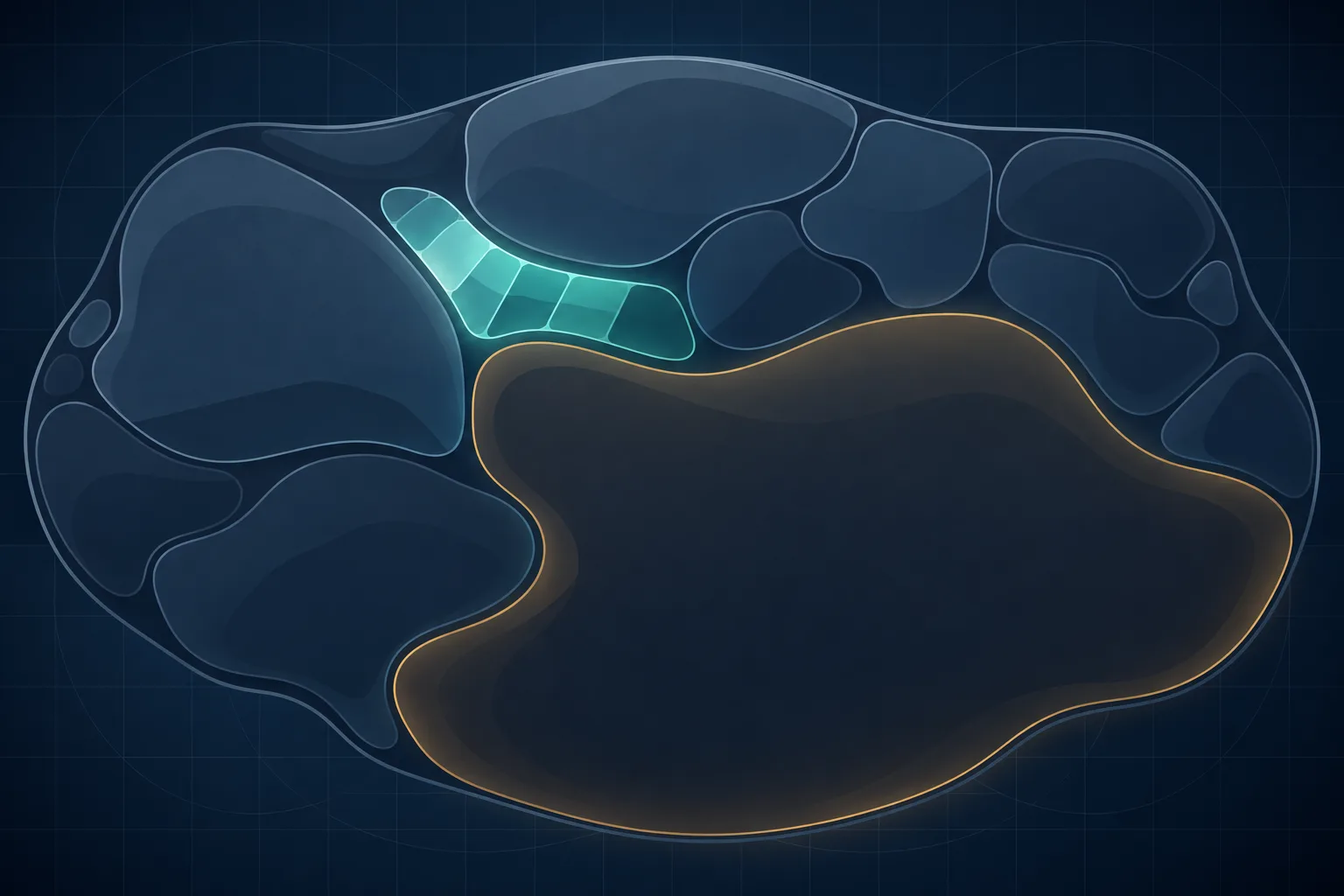
At the end of Q2, Berkshire held about $365.5 billion in cash and short-term US Treasury bills, more than the $299.3 billion of reported 13F value on the same date (down from about $397.4 billion at the end of Q1). In the same quarter, Berkshire was a net buyer of about $19.8 billion of equities and repurchased $4.53 billion of its own stock. None of that cash movement appears in a 13F.
The five Japanese trading houses (Itochu, Marubeni, Mitsubishi, Mitsui and Sumitomo) are missing too. At the end of 2025, Berkshire's stakes ranged from about 9.7% to 10.8%, worth about $35.4 billion in total (Jiji Press via Adnkronos, 2026-03-01). Had they been in the year-end 2025 13F, they would have outweighed the No. 4 holding, Coca-Cola (about $28.0 billion). Shares traded only on non-US exchanges are outside the 13F's scope.
So a 13F alone cannot answer these questions:
- Which positions did Abel decide, and which did Weschler decide?
- When during the quarter, and at what prices, were shares bought or sold?
- Did the Japanese stakes grow further? (Abel said on a September 2026 Tokyo visit that Berkshire is considering raising them.)
- How will the cash and Treasury bill pile be used?
- What happened after July 1, 2026, in Q3?
The filing is a 100-day-old snapshot, limited to US-listed equities and showing only long positions. Even so, its structure is clear: the core four untouched, the edges heavily pruned, and Alphabet built up with intent.
A Checklist Before Acting
- Are the figures you are using tallied from the raw 13F, or summarized by an aggregator site?
- Did you separate changes in reported value from changes in share count? A stock whose price rose can gain weight with no change in shares.
- When the position count drops sharply, did you add up the combined weight of the exited positions?
- Did you combine multiple share classes of the same company, such as Alphabet Class A and Class C?
- Did you check capital allocation outside the 13F (cash, foreign stocks, acquisitions) in the 10-Q or press releases?
- Did you note how many days have passed since the report date, and how many quarters have ended since?
- Did your notes keep facts confirmed by the filing apart from media interpretation, such as who made a decision?
Frequently Asked Questions
Are the stocks in Berkshire Hathaway's 13F picked by Warren Buffett?
Not from the 2026 filings on. Greg Abel became CEO on January 1, 2026, and wrote in his 2026 shareholder letter that he oversees about 94% of the equity portfolio and Ted Weschler about 6%.
Some positions, such as Alphabet, Buffett has said were his idea. A 13F does not identify the manager behind each position, so who decided what can only be inferred from company statements and reporting, not from the filing.
Why don't Berkshire's Japanese trading-house stakes appear in its 13F?
A 13F reports only securities on the SEC's Official List of Section 13(f) Securities, and shares that trade only on non-US exchanges are not on it. Berkshire's stakes in Itochu, Marubeni, Mitsubishi, Mitsui and Sumitomo are Tokyo-listed shares, so they are not in the filing.
Their size has to be checked separately in Berkshire's annual report and shareholder letter, or in Japanese large-shareholding filings.
Key Takeaways
- Berkshire Hathaway's Q2 2026 13F reports $299.3 billion across 29 positions in 26 issuers, with the top five holding 71.9%.
- Q1 brought 16 full exits, cutting the position count from 42 to 29, but those exits made up just 4.3% of the year-end 2025 portfolio, so the center of gravity barely moved.
- Apple, American Express, Coca-Cola and Moody's did not change by a single share across both quarters, while Bank of America has now been cut for eight straight quarters.
- Alphabet grew from 1.6% to 12.6% in three quarters to become the No. 3 holding, and about 59% of the Q2 increase matches the size of a $10 billion private placement with the company.
- The 13F leaves out about $365.5 billion in cash and Treasury bills, about $35.4 billion (end of 2025) in Japanese trading-house stakes, and acquisitions such as OxyChem and Taylor Morrison. It also cannot show who made each decision or when trades happened.
What an individual investor can take from a 13F is less the list of names than the order in which to read it. Separate shares from dollars, add up the weight of what was sold, and check the capital allocation outside the filing. The same habits carry over when you review your own trades.
References
- SEC EDGAR, Berkshire Hathaway Inc., Form 13F-HR, CIK 1067983, accession 0001193125-26-352200 (filed 2026-08-14, report date 2026-06-30)
- SEC EDGAR, Berkshire Hathaway Inc., Form 13F-HR, accession 0001193125-26-226661 (filed 2026-05-15, report date 2026-03-31)
- SEC EDGAR, Berkshire Hathaway Inc., Form 10-Q (Q1 2026 filed 2026-05-04, Q2 2026 filed 2026-08-10)
- SEC, “Frequently Asked Questions About Form 13F” (reviewed 2026-09-28)
- Berkshire Hathaway, press release naming Warren Buffett chairman emeritus and Howard G. Buffett chairman (2026-09-18)
- Berkshire Hathaway, Form 8-K on Greg Abel's appointment as CEO (May 2025)
- Alphabet Inc., SEC filing on the private placement to Berkshire Hathaway (2026-06-01)
- Reuters (Jonathan Stempel), coverage of Berkshire's Q1 and Q2 2026 13F filings (2026-05-15, 2026-08-14)
- Axios, Todd Combs joins JPMorgan (2025-12-08)
- Jiji Press, Berkshire's stakes in Japanese trading houses (2026-03-01)
For reference only: The information in this post is provided for general reference and does not constitute investment advice or a solicitation to trade. Your responsibility: Final investment decisions and their outcomes are entirely your own. No warranty: This information is not guaranteed to be accurate and cannot be used as a basis for legal liability for any investment result.