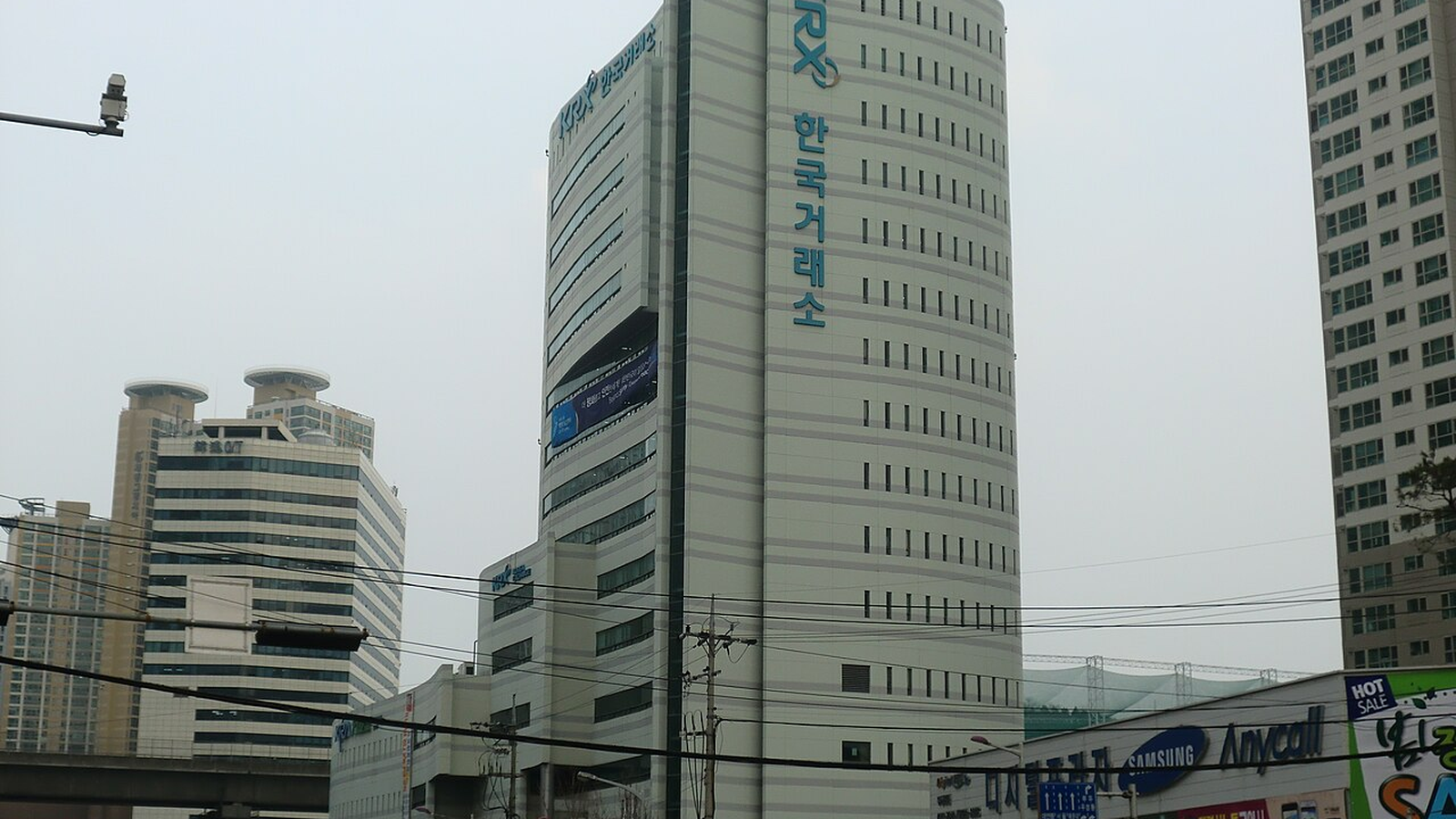
South Korea's KOSPI closed at 5,683.80 on Wednesday, Nov 4, up 35.01 points or 0.62%. Early US midterm counts showing Democrats ahead raised worries about tighter rules for AI data centers, and the index fell as low as 5,421.72 during the session before individual and institutional buyers absorbed 2.51 trillion won of net foreign selling. The gap between the day's high and low was 406 points. Chip heavyweights ended slightly lower, while battery and biotech large caps rallied.
Key takeaways
- The KOSPI opened 2.43% higher at 5,786.13, reached 5,828.13, slid to 5,421.72, and closed at 5,683.80 (+0.62%). It had fallen 3.59% the day before.
- On the main board, foreigners were net sellers of 2.5072 trillion won, while individuals bought a net 1.1442 trillion won and institutions 1.0137 trillion won. Foreign selling in electrical and electronics stocks alone came to 2.1705 trillion won.
- The KOSDAQ closed up 1.50% at 714.95 after dipping to 683.66 during the session.
- Samsung SDI jumped 11.57% to 545,000 won and LG Energy Solution rose 5.03%. KOSDAQ-listed HLB fell 17.69%.
- The won closed at 1,341.5 per dollar, 0.5 won weaker than the previous day.
KOSPI and KOSDAQ at the close
Net buying by investor type (100 million won, preliminary)
Korean flow data is quoted in units of 100 million won (억원), so -25,072 means net selling of about 2.51 trillion won. These are preliminary figures published right after the close; depending on the time of the count, outlets reported foreign net selling between 2.5020 and 2.5095 trillion won.
How the session unfolded: US midterm counting shook the index
The KOSPI opened 2.43% higher at 5,786.13 after the Nasdaq Composite gained 0.83% overnight. Alphabiz reported that chip stocks such as AMD and Broadcom led that rally. The US session is covered in our Nov 3 US market close.
The mood changed around 10 a.m. KST, when US midterm counting began. According to Alphabiz, the index turned lower as Democrats appeared to lead in both chambers of Congress, and it hit 5,421.72 around 12:30 p.m., about 4% below the previous close. The outlet added that NBC and other US broadcasters expected Democrats to win both chambers, which would be the first time in 20 years.
In the afternoon the index climbed more than 260 points from its low and finished in positive territory. Alphabiz attributed the rebound to reduced political uncertainty as the vote picture became clearer, along with institutional buying. Wikitree said profit-taking money that left large chipmakers rotated into the KOSDAQ and other sectors.
Why chipmakers wobbled: AI data-center regulation worries
Several Korean brokerage analysts pointed to the same cause. Lee Kyung-min of Daishin Securities said a Democratic win raised concerns that AI data-center construction and investment spending could be delayed. He added that unless construction stops entirely, the effect on industry conditions and earnings should be limited.
Kim Seok-hwan of Mirae Asset Securities said that if Texas paused data-center construction the way New York had, related projects could be delayed further, according to Newsis. In the same report, Saxo Bank chief investment strategist Charu Chanana said markets were pricing in a better-than-expected Democratic showing.
The worry showed up directly in foreign flows. Alphabiz reported that foreigners sold a net 2.1705 trillion won in electrical and electronics stocks alone. Even so, the big chipmakers closed with small losses. Samsung Electronics fell 0.68% to 218,000 won, and SK hynix slipped 0.14% to 1,396,000 won. SK hynix was the most traded KOSPI stock, with 6.0086 trillion won changing hands.
Sectors and large caps: batteries and biotech lead
According to The Asia Business Daily, most KOSPI sectors rose and five fell. Telecommunications (+4.39%), electricity and gas (+4.03%) and pharmaceuticals (+3.44%) gained the most, while recreation and culture (-6.02%) and medical precision equipment (-2.87%) lagged. More of the 20 largest companies by market value closed higher than lower.
| Stock | Close | Change | Note |
|---|---|---|---|
| Samsung SDI006400 | 545,000 won | +11.57% | Biggest gain among the top 20 by market cap |
| Celltrion068270 | - | +5.32% | Biotech strength |
| LG Energy Solution373220 | - | +5.03% | Battery names up together |
| Samsung Biologics207940 | - | +2.96% | Biotech strength |
| Hyundai Motor005380 | - | +2.16% | |
| Samsung Electronics005930 | 218,000 won | -0.68% | Foreign selling in electronics |
| SK hynix000660 | 1,396,000 won | -0.14% | Most traded (6.0086 trillion won) |


Samsung SDI closed 11.57% higher at 545,000 won. Alphabiz said expectations of a Democratic-led Congress lifted hopes for clean-energy policy, and battery stocks were seen as beneficiaries. LG Energy Solution and the KOSDAQ's EcoPro BM (+10.96%) and EcoPro (+9.54%) rose the same day, so the gains were spread across the battery sector.
KOSDAQ: below 700 intraday, then up 1.50%
The KOSDAQ opened at 715.74, fell as low as 683.66 and closed at 714.95 (+1.50%). Newsway said the intraday dip below 700 was the first since July 31. Institutions bought a net 62.6 billion won, while individuals sold a net 51.1 billion won.
| Stock | Close | Change | Note |
|---|---|---|---|
| EcoPro BM247540 | - | +10.96% | Battery rally |
| EcoPro086520 | - | +9.54% | Battery rally |
| HLB028300 | 33,500 won | -17.69% | FDA review timeline |


HLB closed 17.69% lower at 33,500 won. According to Alphabiz, its US unit Elevar Therapeutics said the US Food and Drug Administration (FDA) had started a full review of the resubmitted New Drug Application (NDA) for its liver-cancer combination therapy. The FDA classified it as a Class 2 resubmission, which takes about six months, setting a target date of April 9 next year. Alphabiz noted this is not a rejection, but it ended hopes of approval this year. Elsewhere on the KOSDAQ, Simmtech (+9.53%) and Jusung Engineering (+7.74%) rose, and Alteogen (-4.45%) fell.
Currency: won at 1,341.5 per dollar
In Seoul, the won closed at 1,341.5 per dollar, 0.5 won weaker than the previous day's daytime close. The currency moved little compared with the swings in stocks. Newsis reported that the US 10-year Treasury yield fell 0.06 percentage point to 4.906% and the dollar index slipped 0.37% to 101.34 (as of Nov 3, US time).
Asian markets and US futures
According to Yonhap, the Nikkei 225 fell more than 3% at one point before trimming losses to close 1.68% lower at 62,021.33. Japanese markets were closed on Nov 3 for a holiday, so the change is measured against the Nov 2 close of 63,081.86. Taiwan's index also dropped more than 3% intraday before closing 0.83% lower.
Mainland China went the other way. Aju Business Daily reported that the Shanghai Composite shook off morning weakness to close 2.16% higher at 3,686.17, and the ChiNext index jumped 6.40%. Starting Nov 4, the People's Bank of China cut the rate on its relending facility for share buybacks and stake increases by major shareholders from 1.25% to 1%.
US stock futures recovered most of their losses by the afternoon. Yonhap reported that December Nasdaq 100 futures, after falling as much as 2.4%, were up 0.54% at 28,157 at 3:35 p.m. KST. At the same time, S&P 500 futures were up 0.32% and Dow futures 0.10%.
What to watch next
- Fri, Nov 6, 8:30 a.m. ET: US Bureau of Labor Statistics (BLS) October jobs report
- Tue, Nov 10, 8:30 a.m. ET: US October Consumer Price Index (CPI)
- Thu, Nov 26: Bank of Korea Monetary Policy Board, its last regular meeting of 2026
- Apr 9, 2027: FDA target date for HLB's liver-cancer combination therapy
FAQ
What did the KOSPI close at on Nov 4, 2026?
The KOSPI closed at 5,683.80, up 35.01 points or 0.62% from the previous session. The intraday high was 5,828.13 and the low 5,421.72.
Why did the KOSPI drop nearly 4% during the session?
Early US midterm counts showed Democrats leading in both chambers of Congress, which raised concerns about stricter AI data-center regulation and delayed investment. Foreigners sold a net 2.1705 trillion won of electrical and electronics stocks.
How much did foreign investors sell on Nov 4?
Preliminary data showed foreigners as net sellers of 2.5072 trillion won on the KOSPI main board. Individuals bought a net 1.1442 trillion won and institutions 1.0137 trillion won.
Why did Samsung SDI shares rise?
Samsung SDI closed up 11.57% at 545,000 won. Reports linked the move to hopes for clean-energy policy under a Democratic-led Congress, with battery makers seen as beneficiaries. LG Energy Solution and EcoPro BM rose the same day.
Why did HLB shares fall?
HLB fell 17.69% to 33,500 won after the FDA classified the resubmission for its liver-cancer combination therapy as Class 2, a review of about six months with a target date of April 9, 2027. That ended hopes of approval in 2026.
Sources
- Aju Business Daily: KOSPI rebounds despite 2.5 trillion won foreign selling
- Alphabiz: KOSPI recovers from 4% midterm drop to close up 0.62%
- Newsway: KOSPI recovers 4% loss, KOSDAQ also closes higher
- Wikitree: KOSPI closes at 5,683.80
- The Asia Business Daily: Volatile KOSPI Closes Slightly Higher
- Seoul Economic Daily: KOSPI Closes Down 3.59% at 5,648.79
- Seoul Finance: Won closes at 1,341.5 per dollar
- Financial News (Newsis): US midterm "blue shock" hits Asian stocks
- Yonhap (via Nate News): Nasdaq futures and Asian stocks swing on midterm results
- Aju Business Daily: China stock market close
- U.S. Bureau of Labor Statistics: November 2026 release schedule
- SBS Biz: Bank of Korea sets 2027 rate meeting schedule