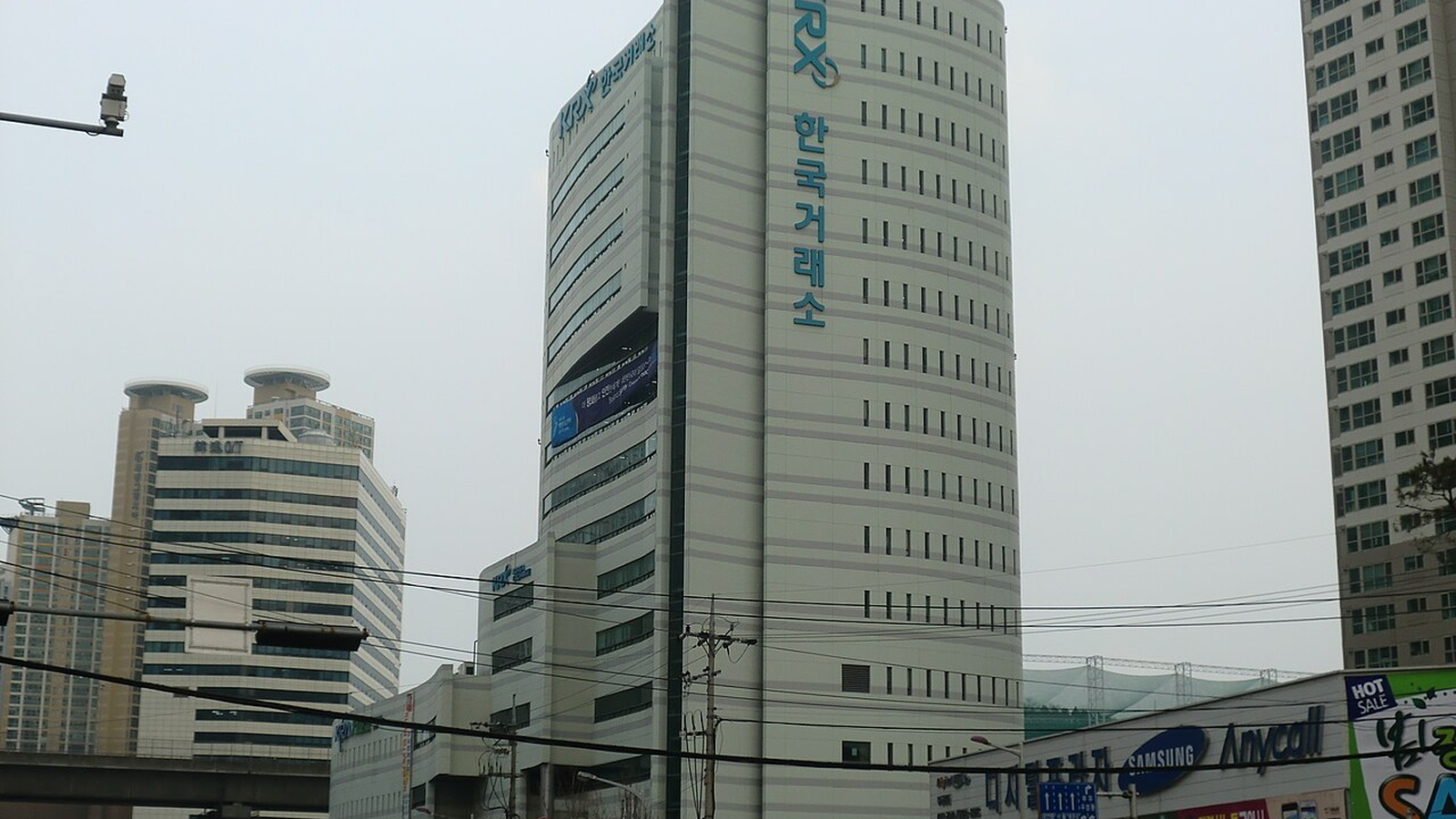
South Korea's KOSPI fell 324.11 points, or 6.02%, to 5,059.69 on Friday, Nov 6 (KST). A drop of more than 8% shortly after the open triggered a level-1 circuit breaker, and foreign investors sold a net 2.77 trillion won of KOSPI shares. It was the second steep fall in a row after a 5.28% loss the day before, with selling concentrated in the big chipmakers after a US semiconductor rout and fears of tighter AI data-center rules in the US.
Key takeaways
- The KOSPI closed at 5,059.69 (-6.02%) and the KOSDAQ at 644.27 (-5.03%). Over two sessions the KOSPI is down 10.98%.
- At about 9:03 a.m. KST the KOSPI was down more than 8%, which set off a level-1 circuit breaker and a 20-minute halt. The intraday low was 4,911.28.
- On the main board, foreigners sold a net 2,769.2 billion won; institutions bought 1,704.2 billion won and individuals 601.0 billion won.
- SK hynix fell 10.44% to 1,132,000 won and Samsung Electronics fell 6.35% to 188,700 won.
- The won weakened 14.5 won to 1,356.6 per dollar at the daytime close. The government suspended brokers' 140% collateral-ratio requirement on margin loans for three months from Nov 9.
Net buying by investor type, in 100 million won (억원; negative means net selling):
How the session unfolded: circuit breaker and sidecars
The KOSPI opened 2.24% lower at 5,263.26. Selling picked up right away, and by about 9:03 a.m. the index was down more than 8%, so the Korea Exchange halted all trading on the main board for 20 minutes under a level-1 circuit breaker. At about 9:34 a.m. a sell-side sidecar also kicked in, briefly holding back program sell orders. That was the second session in a row with a sell-side sidecar.
The intraday low was 4,911.28 (-8.78%). Institutions and individuals then bought, the decline narrowed, and the index closed above 5,000. Program trading was a net sale of 1,603.5 billion won: arbitrage trades were a net 98.5 billion won bought and non-arbitrage trades a net 1,702.0 billion won sold.
Breadth was lopsided. On the main board 760 stocks fell and 131 rose; on the KOSDAQ 1,439 fell and 251 rose. The KOSDAQ had its own sell-side sidecar at about 9:06 a.m.
Chip heavyweights: SK hynix down 10.44%, Samsung down 6.35%
The selling hit the two memory makers hardest. SK hynix closed down 10.44% at 1,132,000 won after touching 1,089,000 won during the session. Samsung Electronics closed down 6.35% at 188,700 won, with an intraday low of 179,200 won. Samsung's preferred shares fell 6.30%.
Single-stock leveraged ETFs that track SK hynix at twice the daily move fell about 20%. The TIGER product lost 20.96% and the KODEX product 20.16%.
US chip stocks had fallen hard the night before. On Nov 5 (ET) the Nasdaq Composite fell 5.52% and the Philadelphia Semiconductor Index fell 12.25%, its largest drop since March 2020.
Neither company reported earnings or made a disclosure that day. The declines were reported as part of a sector-wide sell-off in chip stocks.
Sectors: electrical and electronics down 7.84%; telecom and platforms held up better
Electrical and electronics was the weakest sector at -7.84%. Medical and precision equipment (-7.24%), manufacturing (-6.84%), machinery (-6.55%), securities (-5.74%) and financials (-4.71%) also fell sharply. Selling spread beyond chips to power equipment, batteries, and shipbuilding and defense.
Platform and IT services names such as NAVER and Samsung SDS, along with telecom stocks, held up better than the market.
| Stock | Market | Close | Change |
|---|---|---|---|
| SK hynix000660 | KOSPI | 1,132,000 won | -10.44% |
| Samsung Electronics005930 | KOSPI | 188,700 won | -6.35% |
| Samsung Electronics (pref.)005935 | KOSPI | - | -6.30% |
| LG Energy Solution373220 | KOSPI | - | -5.20% |
| Alteogen196170 | KOSDAQ | 200,500 won | -5.20% |
| EcoPro086520 | KOSDAQ | - | -6.89% |
| EcoPro BM247540 | KOSDAQ | - | -7.36% |


US midterms and AI data-center regulation worries
The Korea Times reported that the Democrats' win of both the Senate and the House in the US midterm elections raised fears of rules that could slow AI data-center construction. According to the same report, Texas Governor-elect Gina Hinojosa, a Democrat, told CNN that data-center projects should pause until safeguards for residents are in place, and she restated a campaign pledge to suspend approvals for new facilities.
That is a state-level proposal; no federal rule has been issued. Topstar News also noted that it is not yet clear whether data-center rules would actually reduce investment. For the previous sessions, see the Nov 5 US market close and the Nov 5 KOSPI close.
Policy response: margin-loan collateral rule suspended for three months
Deputy Prime Minister and Minister of Economy and Finance Lee Hyeong-il chaired a joint market review meeting at the Government Complex Seoul on Nov 6. Financial Services Commission Chairman Lee Eok-won, Financial Supervisory Service Governor Lee Chan-jin and Bank of Korea Senior Deputy Governor Kwon Min-su attended.
The meeting decided to exempt securities firms from the requirement to keep a 140% collateral ratio on margin loans for three months starting Nov 9. The aim is to stop forced liquidations of under-collateralized accounts from deepening the sell-off. Lifting the requirement does not automatically stop forced sales in every account; how it applies depends on each brokerage's follow-up steps.
The same exemption was used for six months from March 2020 and from July 4 to late September 2022. The government said it is preparing further measures if volatility grows.
Currency: won at 1,356.6 per dollar, down 14.5 won
In Seoul, the dollar closed daytime trading at 1,356.6 won, 14.5 won higher than the previous day's daytime close. On the same day foreign investors sold a net 2.77 trillion won of KOSPI shares.
Asian markets: Nikkei down 5.96%, Taiwan down 4.51%
Japan's Nikkei 225 fell 5.96% to 57,434.77, its fifth straight decline and its first close below 60,000 since April 14, about seven months ago. Ryotaro Sawada of Tokai Tokyo Intelligence Lab said the run of losses had weakened dip buying and that investors were pessimistic about the outlook for AI-related stocks.
Taiwan's Taiex fell 4.51% to 39,701.64, and TSMC closed down 4.69%. In mainland China, the Shanghai Composite fell 1.10% to 3,649.18, the Shenzhen Component 2.57% to 11,175.78 and the ChiNext 3.96% to 2,465.23. Hong Kong's Hang Seng was down 1.06% at 24,533.33 at the midday break.
In China, computing-infrastructure names such as optical communications, printed circuit boards and electronic components fell the most, while agriculture, power and bank stocks drew defensive buying.
What to watch next
- Mon, Nov 9: The suspension of the 140% margin-loan collateral requirement takes effect, for three months.
- Tue, Nov 10, 8:30 a.m. ET (10:30 p.m. KST): The US Bureau of Labor Statistics releases the October Consumer Price Index.
- Thu, Nov 19: Korea's college entrance exam day. KOSPI, KOSDAQ and KONEX regular trading runs 10:00 a.m. to 4:30 p.m. KST, one hour later than usual.
FAQ
How much did the KOSPI fall on Nov 6, 2026?
The KOSPI closed at 5,059.69 on Nov 6, down 324.11 points or 6.02%. Including the 5.28% drop on Nov 5, it lost 10.98% over two sessions. The intraday low was 4,911.28.
When and why was the KOSPI circuit breaker triggered?
At about 9:03 a.m. KST the KOSPI was down more than 8% from the previous close, which triggered a level-1 circuit breaker and halted main-board trading for 20 minutes. A sell-side sidecar that briefly holds back program sell orders followed at about 9:34 a.m.
How much did foreign investors sell?
Foreign investors sold a net 2,769.2 billion won (about 2.77 trillion won) on the KOSPI main board, while institutions bought 1,704.2 billion won and individuals 601.0 billion won. On the KOSDAQ, foreigners sold 100.1 billion won, individuals sold 110.6 billion won and institutions bought 205.8 billion won.
What is the margin-loan collateral exemption?
It lifts the rule that securities firms keep a 140% collateral ratio on margin loans, for three months from Nov 9, 2026. The goal is to keep forced sales from adding to market declines. It does not stop forced sales in every account automatically, and brokerages may apply it differently.
Sources
- Newspim: KOSPI barely holds 5,000 after 6% plunge (Korean)
- Asia Today: "Black Friday" KOSPI falls 6%, closes just above 5,000 (Korean)
- Asia Economy: KOSPI closes down 6% after circuit breaker (Korean)
- Topstar News: KOSPI falls 6.02% to 5,059.69, foreigners sell 2.77 trillion won (Korean)
- The Korea Times: Black Friday: KOSPI sinks 6%, extending slide on US AI regulation fears
- Seoul Economic Daily: KOSPI Plunges 6.02% to Close at 5,059.69
- Seoul Finance: Won closes at 1,356.6 per dollar, up 14.5 won (Korean)
- Seoul Finance: 140% margin-loan collateral requirement suspended for three months (Korean)
- Newspim: China stocks close lower as US tech sell-off spreads (Korean)
- Supple: Nikkei falls below 60,000 for fifth straight loss, Asia close (Korean)
- 21st Century Business Herald: Hong Kong midday, Hang Seng Tech down 1.75% (Chinese)
- U.S. Bureau of Labor Statistics: Schedule of releases for the Consumer Price Index
- Financial News: Korean markets open at 10 a.m. on exam day, Nov 19 (Korean)