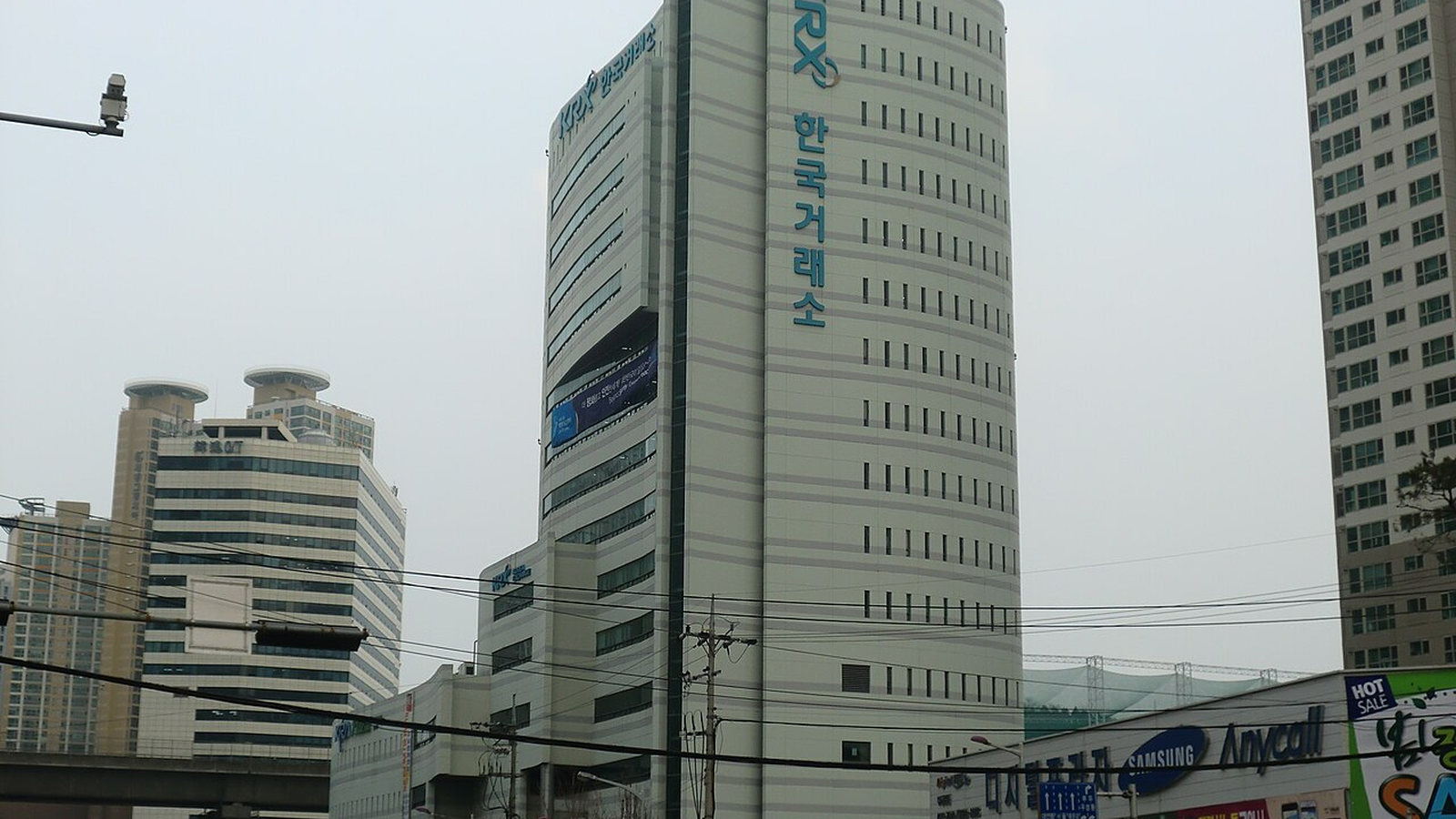
The KOSPI closed at 5,383.80 on Thursday, Nov 5, down 300.00 points or 5.28%, and the KOSDAQ fell 5.11% to 678.41. After Democrats won both chambers of the US Congress, investors worried that AI data-center construction could face tighter rules, and foreign investors sold Samsung Electronics and SK hynix heavily. Wall Street had risen the night before, but the KOSPI was pulled down by its two largest chip stocks.
Key takeaways
- The KOSPI fell 5.28% to 5,383.80. Its intraday low was 5,336.88, down 6.10%.
- Sell-side "sidecars" hit the KOSPI at 10:16 a.m. KST and the KOSDAQ at 2:27 p.m., pausing program sell orders for five minutes each time.
- Foreign investors sold a net 3.83 trillion won (3조8,316억원) of KOSPI shares in KB Securities' closing tally. It was their fifth straight day of net selling.
- Samsung Electronics fell 7.57% to 201,500 won, and SK hynix dropped 9.46% to 1,264,000 won.
- The won weakened by 0.6 won to 1,342.1 per dollar at the 3:30 p.m. close.
Indexes and investor flows
The KOSPI opened 1.82% lower at 5,580.09 and kept falling. On the main board, 537 stocks fell and 344 rose. Program trading was a net 1.70 trillion won (1조6,982억원) sale.
These are KB Securities' closing figures. An earlier tally published right after the bell put foreign net selling on the KOSPI at 3.39 trillion won, with individuals buying 2.27 trillion won and institutions 845.7 billion won. The amounts differ by timing, but both show the same pattern: foreigners sold and individual investors bought.
Why it fell: the US midterms and data-center rules
Democrats won control of both the House and the Senate in the US midterm elections on Nov 3 (ET). On Nov 4 (ET), Wall Street rallied as political uncertainty cleared: the Dow Jones Industrial Average rose about 3%, the S&P 500 1.6% and the Nasdaq Composite 1.4%. Chip stocks went the other way. The Philadelphia Semiconductor Index fell 3.1% to a six-month low, with Micron down 7.0%, Nvidia down 3.2% and CoreWeave down 9.9%.
Korean media reported that Democratic governor candidates who had pledged to curb data-center construction won in Texas, Georgia and Ohio, all states with many data centers. Moon Nam-joong of Daishin Securities noted that Democrats have already proposed six bills, including a cut to the 100% bonus depreciation on data-center investment and taxes on AI use and AI windfall profits. He said closer congressional scrutiny of AI companies and higher infrastructure costs could slow the pace of AI investment.
Lee Kyung-min, also of Daishin Securities, said the end of the election removed some political uncertainty, but worries about data-center regulation outweighed that and hurt sentiment. Analysts disagree on how much the rules would actually change. Han Ji-young of Kiwoom Securities said data-center projects already under way are unlikely to be disrupted, so the impact on existing supply contracts and AI-infrastructure earnings should be limited. Byeon Jun-ho of IBK Investment & Securities said the rules are unlikely to take concrete shape soon, but uncertainty over foreign flows into Korean memory stocks may persist.
Chip heavyweights: about 70% of foreign selling
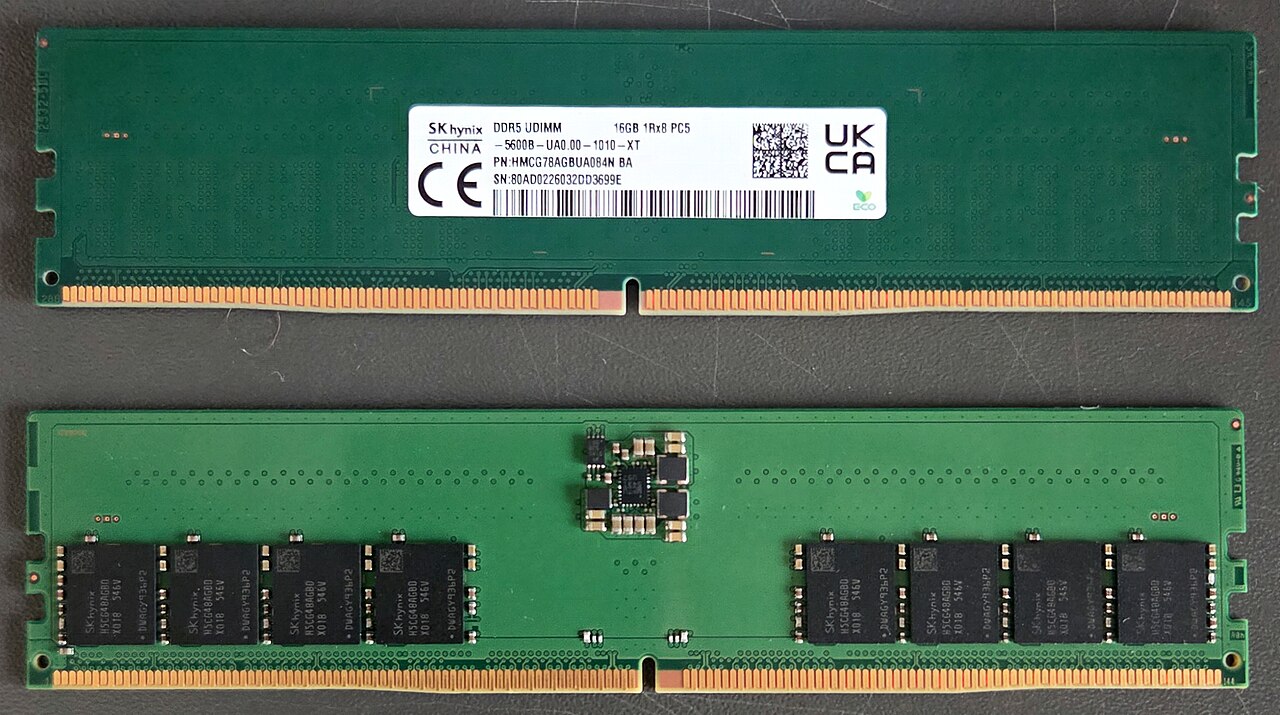
In KB Securities' tally, foreign investors sold a net 1.52 trillion won of SK hynix and 1.16 trillion won of Samsung Electronics, about 70% of their net KOSPI selling for the day. Lim Jeong-eun of KB Securities said Samsung and SK hynix led the KOSPI lower, while chip materials, parts and equipment makers led the KOSDAQ down.
Trading was concentrated in the same two names. SK hynix traded 8.02 trillion won and Samsung Electronics 7.20 trillion won. Samsung touched 199,800 won during the session before closing just above 200,000 won.
| Stock | Close (won) | Change | Note |
|---|---|---|---|
| SK hynix000660 | 1,264,000 | -9.46% | Foreign net selling 1.52T won |
| Samsung Electronics005930 | 201,500 | -7.57% | Foreign net selling 1.16T won |
| Samsung Electro-Mechanics009150 | 944,000 | -15.34% | No company-specific negative news reported |
| SK Square402340 | 809,000 | -10.01% | Holding company that owns an SK hynix stake |
| Samsung SDI006400 | 509,000 | -6.61% | Large caps fell together |
| Celltrion068270 | 215,000 | +7.50% | Institutional and foreign buying |
| Hyundai Motor005380 | 293,500 | +3.53% | Money moved into autos |


Samsung Electro-Mechanics fell 15.34% to 944,000 won, below 1 million won. Reports said there was no negative disclosure or news about the company itself. SK Square, the holding company that owns a stake in SK hynix, lost 10.01%.
Sectors: electronics down, pharma and telecom up
Among KOSPI sectors, medical and precision instruments fell 11.48%, electrical and electronics 8.53% and machinery and equipment 5.36%. Pharmaceuticals rose 4.12%, telecom 2.44% and food, beverages and tobacco 2.40%.
Part of the money that left chips went into autos, financials and biotech. KB Financial rose 3.63% and Samsung Biologics 1.67%. Celltrion gained 7.50% to 215,000 won. A regional outlet pointed to first preclinical results for an obesity drug candidate that a Japanese partner, co-developing it with Celltrion, published on Nov 4, but the same report said it was not confirmed that those results alone explained the move.
Currency
The won closed the 3:30 p.m. session at 1,342.1 per dollar, 0.6 won weaker than the previous day. A softer dollar had been expected after the midterms, but analysts said foreign selling of Korean stocks weighed more. The won had started the day stronger and reversed as the stock market fell.
Asian markets and overseas moves
Japanese chip stocks fell along with Korea's, while markets in China and Hong Kong rose.
The Nikkei 225 fell for a fourth straight day to its lowest close in about five and a half months, as large AI and chip names such as Advantest and SoftBank Group declined. The broader TOPIX rose 1.16%, ending a four-day losing streak.
In Hong Kong, Alibaba rose 6.36% and Tencent 6.42%, and the Hang Seng Tech Index gained more than 5%. The People's Bank of China cut the rate on its relending facility for share buybacks and share purchases by 25 basis points to 1%, and Chinese chip stocks rose on Beijing's new market-support measures. On the mainland, solar and precious-metals stocks gained while oil and gas names fell with crude.
On Nov 4 (ET), Brent crude settled 8.7% lower at $94.62 a barrel and WTI fell 8.3% to $88.12, as Democratic gains raised hopes of an end to the US-Iran conflict. After the Korean close, Nasdaq-100 futures were down 1.1% and S&P 500 futures down 0.2%, while Dow futures were up 0.4%. Qualcomm fell 6.5% in after-hours trading following its results on Nov 4 (ET).
For the previous session, see the KOSPI close on Nov 4. For the US chip rebound earlier in the week, see the US close on Nov 3.
What to watch next
- Nov 5 (ET): US weekly jobless claims; ConocoPhillips results before the open; Airbnb and Akamai results after the close.
- Nov 6 (ET): US October nonfarm payrolls report.
FAQ
How much did the KOSPI fall on Nov 5, 2026?
The KOSPI closed at 5,383.80, down 300.00 points or 5.28% from the previous session. During the day it fell as far as 5,336.88, a 6.10% drop. The KOSDAQ closed 5.11% lower at 678.41.
Why did Korean stocks drop on Nov 5?
Democrats won both chambers of the US Congress in the midterm elections, raising concerns about tighter rules on AI data centers. The Philadelphia Semiconductor Index fell 3.1% the night before, and foreign investors sold large amounts of Samsung Electronics and SK hynix.
When were the sidecars triggered?
On the KOSPI, a sell-side sidecar was triggered at 10:16 a.m. KST after KOSPI 200 futures fell sharply. On the KOSDAQ, it came at 2:27 p.m. KST after KOSDAQ 150 futures fell 6.07%. In both markets, program sell orders were paused for five minutes.
How much did foreign investors sell?
In KB Securities' closing tally, foreign investors sold a net 3.83 trillion won of KOSPI shares, their fifth straight day of net selling. That included 1.52 trillion won of SK hynix and 1.16 trillion won of Samsung Electronics. Individuals bought a net 2.70 trillion won and institutions 934.8 billion won.
Did any sectors rise?
Yes. Pharmaceuticals rose 4.12%, telecom 2.44% and food, beverages and tobacco 2.40%. Among individual stocks, Celltrion gained 7.50%, KB Financial 3.63% and Hyundai Motor 3.53%.
Sources
- Financial News: KOSPI falls 5.28%, below 5,400 (closing report, Korean)
- Financial News: Samsung and SK hynix fall on AI regulation concerns (Korean)
- Wikitree: KOSPI 5383, KOSDAQ 678, sell sidecars in both markets (Korean)
- EBN via Investing.com Korea: KOSPI drops 5% on US AI regulation concerns (Korean)
- Mediapen: KOSPI falls 5.28% on foreign selling (Korean)
- Blockmedia: KOSPI closing report (Korean)
- Today Shinmun: Samsung and SK hynix fall on US data-center rule concerns (Korean)
- Namdo Ilbo: Celltrion rises 7.50% (Korean)
- Ziksir: Won closes at 1,342.1 per dollar (Korean)
- Newspim: Japan stocks close, Nikkei down for a fourth day (Korean)
- Newspim: China stocks close (Korean)
- Investing.com: Asia stocks mixed as chip rout triggers KOSPI trading halt
- CNBC: Stock market today live updates
- Seoul Economic Daily: KOSPI Plunges 5.28% to Close at 5,383.80