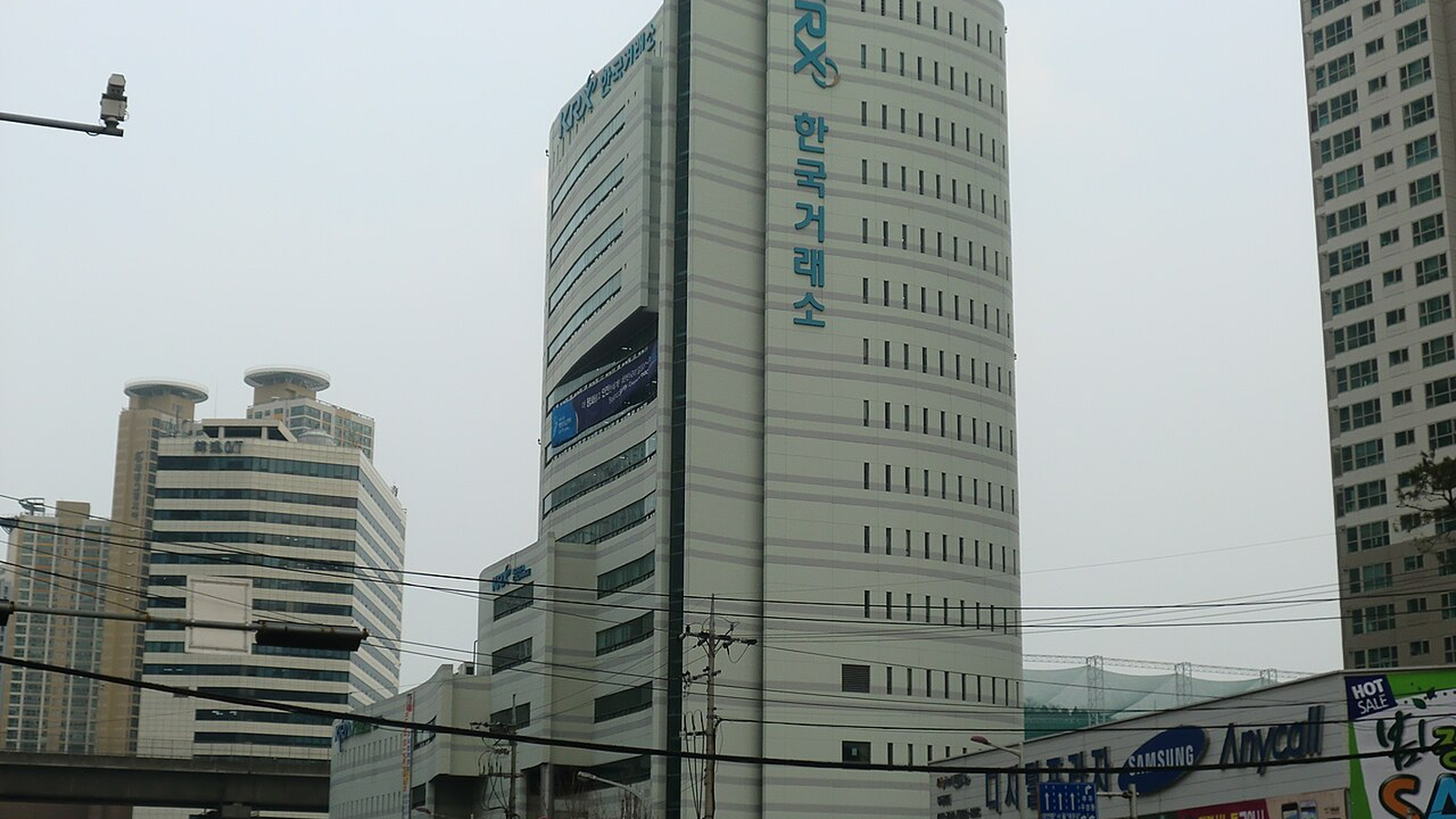
The KOSPI closed at 5,100.50 on Monday, Nov 16, down 190.03 points or 3.59%, as foreign investors sold SK hynix, Samsung Electronics and the rest of Korea's large chip stocks. The KOSDAQ fell harder, losing 4.86% to 665.65. Local brokers tied the selling to fading confidence in AI spending in a week that brings Nvidia's earnings and Anthropic's Nasdaq listing.
Key takeaways
- The KOSPI opened 0.28% higher at 5,305.40 and reached 5,327.99 early, then slid to 5,069.83 around 2:57 p.m. KST before closing at 5,100.50.
- Foreign investors were net sellers of between 1.38 trillion and 1.70 trillion won on the main board, depending on the tally, and individuals bought a similar amount.
- SK hynix fell 7.89% to 1,120,000 won, and Samsung Electronics fell 4.47% to 196,800 won, back under 200,000 won.
- Chip equipment makers led the KOSDAQ lower: Simmtech fell 13.38%, Jusung Engineering 11.88% and EO Technics 9.79%.
- Taiwan's Taiex dropped 6.03% and Japan's Nikkei 225 lost 2.42%, while Hong Kong's Hang Seng edged higher.
Indexes and investor flows
Korean outlets published different investor-flow figures right after the close. Some put net foreign selling on the main board near 1.38 trillion won; others put it near 1.70 trillion won. The table shows the range of reported figures, converted from the Korean unit 억원 (100 million won) to billions of won. The Korea Exchange's final data may differ.
Futures went the other way. In KOSPI 200 futures, foreigners were net buyers of 323.8 billion won while institutions were net sellers of 391.2 billion won.
Chip stocks led the decline
The losses were concentrated in semiconductors. SK hynix closed 7.89% lower at 1,120,000 won and Samsung Electronics 4.47% lower at 196,800 won. Samsung's preferred shares fell 5.40%. SK Square dropped 9.71% to 688,000 won, Samsung Electro-Mechanics 8.19% to 785,000 won and Hanmi Semiconductor 6.60%.
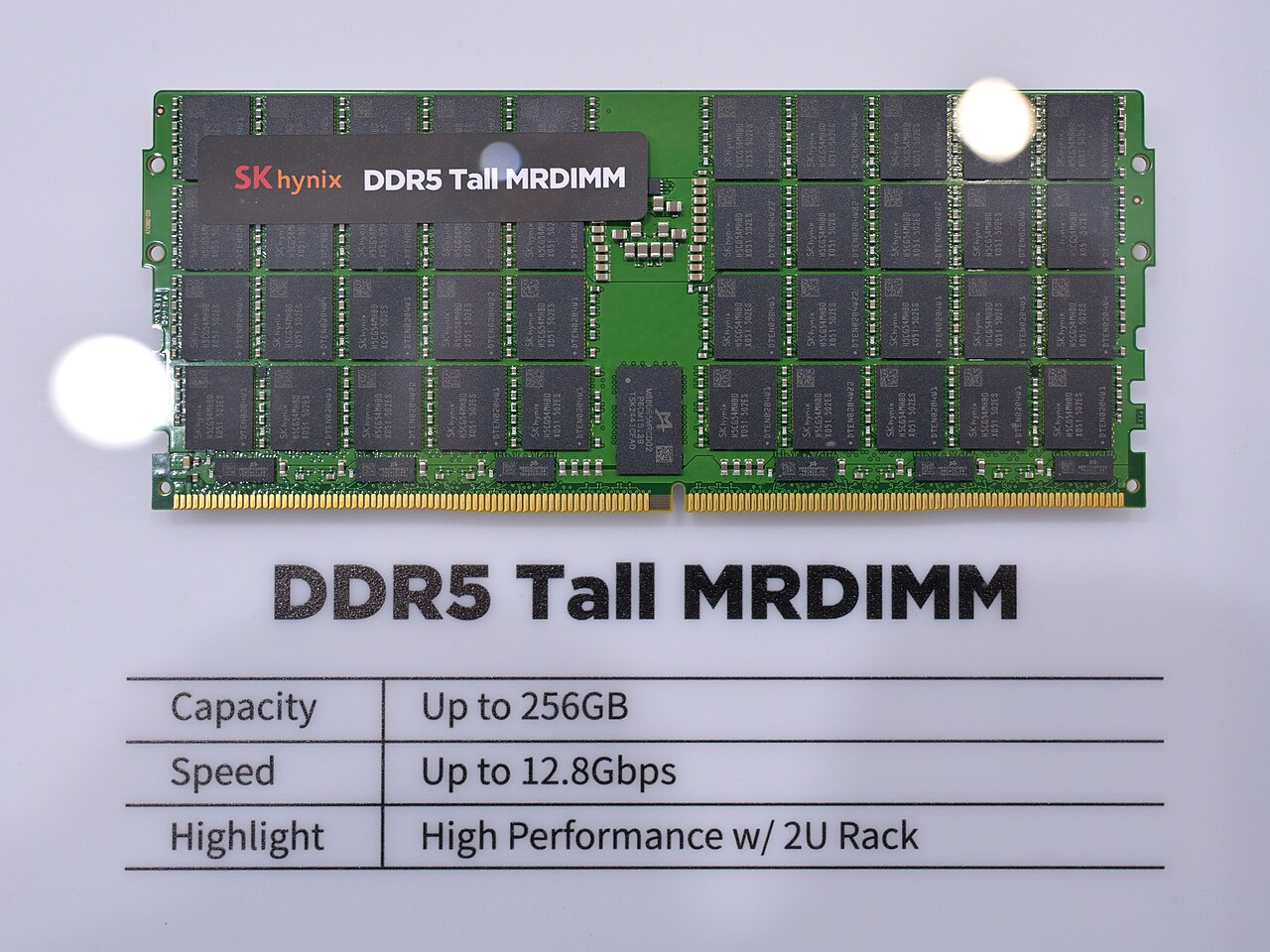
The reason brokers cited most often was uncertainty at Nvidia. Lee Kyung-min of Daishin Securities said Korean stocks weakened as AI investment sentiment shrank again, and pointed to the uncertainty around former CEO Jensen Huang along with caution ahead of Nvidia's results and Anthropic's listing. He also said foreign net selling picked up in the afternoon.
Funding worries at AI data-center companies came up as well. Jeong Hee-chan of Samsung Securities said uncertainty about circular financing arrangements had spread since Huang's resignation and weighed on sentiment. Financial News reported that CoreWeave's plan to sell $4 billion of investment-grade bonds and Nebius's comments about needing more funding added to those concerns.
Memory makers also faced a court ruling and a weaker NAND outlook. A US federal judge denied a motion by Samsung Electronics, SK hynix and Micron to dismiss a class action alleging they colluded on DRAM supply and prices. Kang Jin-hyuk of Shinhan Securities said the ruling put pressure on sentiment toward Korean chip stocks. Seoul Economic TV reported that Bank of America (BofA) cut its NAND outlook, saying NAND spot prices had fallen nearly 20% since October.
Korean chip stocks also followed the previous US session. On Friday, Nov 13 (ET), Nvidia fell 2.01%, AMD 8.75% and Broadcom 4.76%. That session is covered in our US market close for Nov 13, and Huang's resignation in the Nov 12 close.
What rose: insurers, food, transport
Some sectors gained while the index lost more than 3%. Food, beverages and tobacco rose 2.73%, insurance 1.78% and transportation and warehousing 1.67%. Machinery and equipment fell 4.02%, medical and precision instruments 3.94% and construction 2.44%.
DB Insurance rose 7.33%, Samyang Foods 6.20%, Hanjin KAL 5.90%, HMM 3.26%, KT&G 2.78% and Samsung Fire & Marine Insurance 2.46%. Among the largest companies by market value, KB Financial Group was almost alone in rising, up 1.64% to 161,600 won. Daishin's Lee described a widening rotation into financials and consumer staples. Seoul Economic TV and Bloomingbit linked HMM's gain to its third-quarter operating profit of 1.3947 trillion won.
KOSDAQ: chip equipment and HLB Therapeutics
The KOSDAQ lost 4.86%, more than the main board. It opened higher at 705.88 and fell as low as 664.98. Chip equipment and materials names took the largest losses.
| Stock | Change | Note |
|---|---|---|
| Simmtech222800 | -13.38% | Chip substrates |
| Jusung Engineering036930 | -11.88% | Chip equipment |
| EO Technics039030 | -9.79% | Chip equipment |
| Wonik IPS240810 | -9.78% | Chip equipment |
| HPSP403870 | -9.09% | Chip equipment |
| Leeno Industrial058470 | -5.04% | Samsung Securities called Q3 an earnings shock |
| HLB Therapeutics115450 | -29.98% (limit down) | US unit's Phase 3 trial missed primary endpoint |
| Mirae Asset Venture Investment100790 | +17.13% | SpaceX-related buying |


HLB Therapeutics closed at its daily limit-down price of 1,635 won. Its US subsidiary Regentree said the Phase 3 trial of RGN-259 (SEER-2) did not reach statistical significance on the primary endpoint, the four-week complete cure rate. The company plans to review secondary endpoints once it receives the full data. Unlike US stocks, Korean shares have a daily price limit, and a limit-down close means the stock fell as far as the exchange allows in one session.
Mirae Asset Venture Investment rose after SpaceX caught a Starship booster with its robotic arms on Nov 14 (local time). Mirae Asset group companies had co-invested 4 billion won in SpaceX.
Major stock moves
| Stock | Change | Note |
|---|---|---|
| SK hynix000660 | -7.89% | Closed at 1,120,000 won |
| Samsung Electronics005930 | -4.47% | Closed at 196,800 won, below 200,000 |
| SK Square402340 | -9.71% | Closed at 688,000 won |
| Samsung Electro-Mechanics009150 | -8.19% | Closed at 785,000 won |
| Hanmi Semiconductor042700 | -6.60% | Chip equipment |
| Samsung SDI006400 | -3.24% | Closed at 462,500 won after rising over 5% early |
| KB Financial Group105560 | +1.64% | Closed at 161,600 won |
| HMM011200 | +3.26% | Third-quarter results |
| DB Insurance005830 | +7.33% | Insurers rose |


Won and rates
The won ended the day session at 1,335.7 per dollar, 1.0 won stronger than the previous close, after opening at 1,336.0. Seoul Economic Daily said exporters' dollar sales kept the rate from rising despite foreign selling of Korean stocks, and named US inflation, Fed tightening worries and Middle East tension as upward pressure.
US rates were also mentioned as a headwind. Newspim reported that the US producer price index rose 0.3% in October from September, below the 0.4% forecast, but 6.5% from a year earlier, and that the 10-year Treasury yield briefly topped 5%. The previous Korean session is in our KOSPI close for Nov 13.
Asian markets and overseas news
Taiwan and Japan had the steepest losses in Asia. Taiwan's Taiex fell 2,635.04 points (6.03%) to 41,040.08, the largest drop among major Asian indexes. Etoday, citing the Associated Press, reported that the US chip sell-off and Nvidia's management uncertainty spread across Taiwanese tech stocks.
Japan's economy shrank at an annualized 0.1% in the third quarter, against a Reuters poll forecast of 0.3% growth. CNBC reported that higher energy prices hurt consumption and net exports. The Nikkei closed below 60,000.
China's October retail sales rose 0.4% from a year earlier, short of the 0.8% forecast. Industrial output grew 4.8%, below the 5.3% estimate, and fixed-asset investment fell 8.1% in the first ten months. Unemployment edged down to 5.1%. The Hang Seng rose on bargain buying after earlier declines.
US stock futures were lower at about 3:48 p.m. KST: Nasdaq-100 futures were down 0.77%, S&P 500 futures 0.37% and Dow futures 0.20%.
What to watch next
- Nov 16 (ET): Speech by Federal Reserve Chair Kevin Warsh
- Nov 17 (ET), after the US close: Nvidia third-quarter results (morning of Nov 18 KST)
- Nov 18 (ET): Minutes of the Fed's October FOMC meeting; Anthropic sets its IPO price
- Nov 19 (ET): Anthropic scheduled to begin trading on Nasdaq under the ticker ANT
FAQ
Where did the KOSPI close on Nov 16, 2026?
The KOSPI closed at 5,100.50, down 190.03 points or 3.59%. It opened higher at 5,305.40 but fell as low as 5,069.83 in the afternoon as foreign selling grew. The KOSDAQ closed at 665.65, down 34.01 points or 4.86%.
How much did foreign investors sell?
Foreign investors were net sellers of between 1.38 trillion and 1.70 trillion won on the KOSPI main board. Outlets reported different totals right after the close, so the figure is given as a range. Institutions also sold 444 billion to 463 billion won, and individuals bought 1.34 trillion to 1.68 trillion won.
How far did Samsung Electronics and SK hynix fall?
Samsung Electronics fell 4.47% to 196,800 won, back below 200,000 won. SK hynix fell 7.89% to 1,120,000 won. Local brokers cited uncertainty at Nvidia, funding worries at AI companies and a US court ruling that let a DRAM price-fixing lawsuit proceed.
Which sectors rose on Nov 16?
Food, beverages and tobacco rose 2.73%, insurance 1.78% and transportation and warehousing 1.67%. DB Insurance gained 7.33%, Samyang Foods 6.20%, Hanjin KAL 5.90% and HMM 3.26%. KB Financial Group rose 1.64% among the largest companies.
How did other Asian markets do?
Taiwan's Taiex fell 6.03%, Japan's Nikkei 225 2.42% and the Shanghai Composite 0.87%. Hong Kong's Hang Seng was up 0.45% at 4:45 p.m. KST. Japan reported a third-quarter GDP contraction and China reported weak October retail sales on the same day.
Sources
- Newspim: Foreigners sell 1.7 trillion won, KOSPI barely holds 5,100
- Seoul Economic TV: KOSPI falls over 3% to 5,100 as foreigners net sell 1.7 trillion won
- The Asia Business Daily: KOSPI Closes Down 3% on Foreign and Institutional Selling
- Financial News: KOSPI falls 3.59% to 5,100
- Global Economic Times: KOSPI falls 3.59% to 5,100
- Korea Economic TV: Foreigners dump 1.6 trillion won, KOSPI closes down 3.59%
- License News: KOSPI closes down 190.03 points at 5,100.50
- Bloomingbit: Kospi Falls 3.6% to 5,100 as Foreigners Sell 1.7 Trillion Won
- Seoul Economic Daily: Won ends 1.0 won stronger at 1,335.7 despite stock slide
- Etoday: Asian stocks fall on AI bubble fears, Nikkei down 2.4%
- Money Today (via Supple): Nikkei down 2.42% on tech selling
- CNBC: Japan's economy contracts, third quarter GDP misses expectations
- CNBC: China's slowdown deepens in October
- CNBC: Stock market today, live updates (Nov 16)
- Tom's Hardware: Judge denies motion to dismiss DRAM price-fixing lawsuit