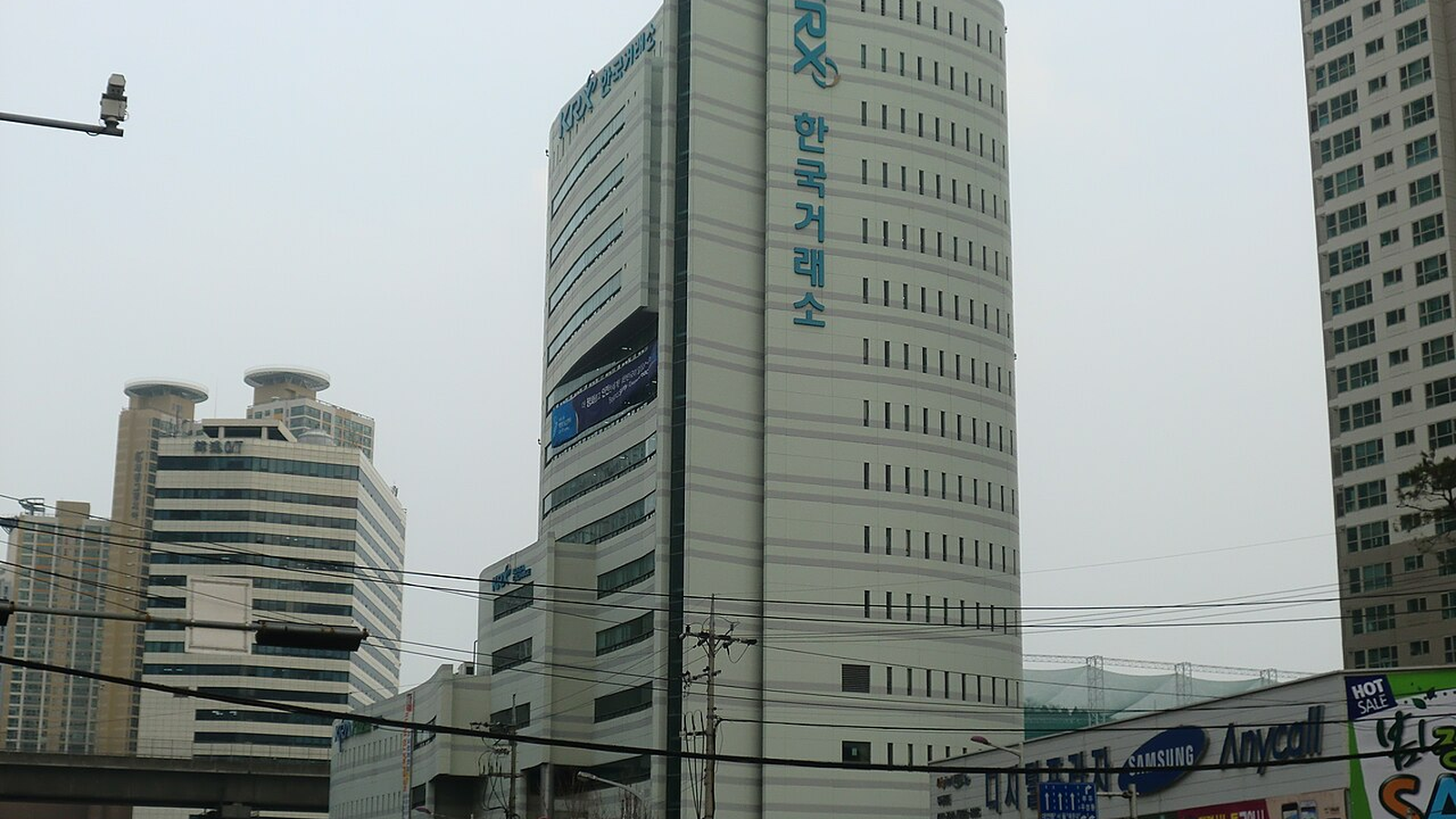
The KOSPI closed at 5,137.89 on Thursday, Nov 19, up 70.45 points or 1.39%. It fell as low as 4,963.61 in the morning, back below the 5,000 mark, then recovered in the afternoon as buyers returned to the big chip stocks and a Korea-China free trade agreement (FTA) deal on services and investment lifted entertainment, travel and cosmetics shares. The index finished at its high of the day, and the KOSDAQ rose 3.32% to 684.81.
Trading started an hour late because of Korea's national college entrance exam (Suneung): the regular session ran from 10:00 to 16:30 KST. Foreign investors were net sellers for a fifth straight session, while institutions turned to small net buying.
Key takeaways
- The KOSPI rose 1.39% to 5,137.89 and the KOSDAQ 3.32% to 684.81. Both closed well above their intraday lows (4,963.61 and 650.39).
- Foreigners sold a net 405.5 billion won of KOSPI shares, their fifth straight day of net selling. Institutions bought a net 19.2 billion won and individuals sold 65.2 billion won (preliminary).
- After Korea and China announced a substantive conclusion of FTA talks on services and investment, HYBE traded 13.03% higher at 188,300 won around 16:15 KST, and Studio Dragon hit the daily limit (+29.96%) on the KOSDAQ.
- Samsung Electro-Mechanics rose 9.26% on news of expanded package-substrate supply to Nvidia, and SK hynix gained 3.41% to 1,183,000 won.
- The trade ministry said Korea's exports for the year passed $1 trillion on a provisional count, making it the fourth country to do so after the US, Germany and China.
Indexes and investor flows
KOSPI trading value was about 12.75 trillion won (preliminary). Advancers beat decliners 562 to 307 on the KOSPI and 1,170 to 499 on the KOSDAQ.
Korean reports quote flows in units of 100 million won (eok); -4,055 means a net sale of 405.5 billion won. Program trading on the KOSPI was a net sale of 242.4 billion won. Figures differ slightly between outlets depending on when they were compiled, so the exchange's final numbers may move a little. Han Ji-young, an analyst at Kiwoom Securities, said it was worth noting that the intensity of foreign selling was easing.
How the session played out
The KOSPI opened 0.45% higher at 5,090.04 but soon turned lower. In New York the day before, the Dow Jones Industrial Average fell 1.11% and the S&P 500 0.23%, and Nvidia dropped 2.89% despite strong results. Minutes from the Federal Reserve's last meeting showed some officials discussing further rate increases, which added to worries about high valuations in AI stocks. Our US close for Nov 18 covers that session.
In the afternoon, buyers came back to the chip stocks that had fallen hard, on continued expectations of solid demand for AI chips, and the index closed at its high of 5,137.89. The KOSPI slipped below 5,000 on Nov 17, recovered to 5,067.44 with a 1.99% gain on Nov 18, and rose for a second day on Nov 19.
Sectors: medical equipment, electronics and entertainment lead
By sector, entertainment and culture rose 9.39%, medical and precision equipment 4.60%, electrical and electronics 2.16%, and machinery 2.02%.
Lee Kyung-min, an analyst at Daishin Securities, described a market driven by flows amid regulatory uncertainty around Nvidia and macro pressure. He said expectations that China would ease its unofficial curbs on Korean culture (known in Korea as the hanhanryeong) grew after the Korea-China summit, lifting cosmetics stocks across the board.
The Korea-China FTA services deal
At a summit in Shenzhen on Nov 18, held alongside the Asia-Pacific Economic Cooperation (APEC) leaders' meeting, Korea and China declared a substantive conclusion of follow-up FTA negotiations on services and investment, eight years and eight months after the talks began in March 2018. Under the deal, Korean films and online games get most-favored-nation treatment in China's pre-screening process, so they are treated no less favorably than content from third countries. Co-production expands from films to dramas, animation, variety shows and documentaries, and Korean travel agencies may sell overseas trips to residents in 23 Chinese regions.
The deal does not explicitly lift limits on K-pop concerts or the distribution of Korean broadcast content. A formal signing, entry into force and China's actual opening measures are still to come, and some technical wording is still under working-level discussion, so reports cautioned that the curbs have not been fully lifted.
HYBE: up about 13% in the session
HYBE closed the Nov 18 regular session up 7.62% at 166,600 won, and the gain grew on Nov 19. Around 16:15 KST, shortly before the close, it traded at 188,300 won, 13.03% above the previous close. At the Nov 18 close its market value was about 7.2 trillion won, 76th on the KOSPI.
Korean media tied the rally to hopes that the FTA deal would ease China's curbs on Korean content. Reports also pointed to HYBE's Nov 18 announcement that its Japanese unit, HYBE Japan, would launch a tender offer for up to 50.1% of Japanese entertainment company KeyHolder at 1,200 yen a share, for a maximum of about 105.7 billion won.
Chart data
Chart summary: HYBE (352820) daily candles, 2026-07-20 to 2026-11-19. Close 203,000 KRW → 186,800 KRW (-8.0%); period high 231,500 (2026-07-28), low 136,500 (2026-11-04). Marked: FTA announced 2026-11-18 close 178,600, China FTA rally 2026-11-19 close 186,800.
On the chart, HYBE fell to 139,100 won on Nov 4 and then traded in the 140,000s and 150,000s before climbing into the high 180,000s over Nov 18 and 19, close to its mid-October high (186,200 won on Oct 19). The price ended above both its 20-day and 60-day moving averages. The chart's daily bars come from a different price feed and do not match the reported regular-session closes exactly: the Nov 18 bar closes at 178,600 won, above the regular-session close of 166,600 won.
Other entertainment, travel and cosmetics names
At the same time (around 16:15 KST), CJ ENM was up 27.16%, Hana Tour 16.42%, Jeju Air 11.47%, Hotel Shilla 9.16% and Amorepacific 8.42%. Studio Dragon rose by the 29.96% daily limit to 30,800 won on the KOSDAQ. Topstar News described the travel-agency opening as a concrete market-access step and the cosmetics gains as resting on more indirect hopes.
| Stock | Market | Move | Note |
|---|---|---|---|
| HYBE352820 | KOSPI | +13.03% (around 16:15 KST) | China FTA deal, KeyHolder tender offer |
| CJ ENM035760 | KOSDAQ | +27.16% (around 16:15 KST) | Wider co-production scope |
| Studio Dragon253450 | KOSDAQ | +29.96% (limit up) | Drama co-production |
| Hana Tour039130 | KOSPI | +16.42% (around 16:15 KST) | Travel sales in China allowed |
| Jeju Air089590 | KOSPI | +11.47% (around 16:15 KST) | Hopes for more travel between the countries |
| Amorepacific090430 | KOSPI | +8.42% (around 16:15 KST) | Hopes of eased curbs |


Chips: Samsung Electro-Mechanics up 9.26%, SK hynix up 3.41%
Samsung Electro-Mechanics rose 9.26%, the biggest gain among the largest KOSPI companies. On Nov 18 the company said it would strengthen its supply of advanced package substrates to support production of Nvidia's next-generation accelerated computing platform, and Nvidia said on its earnings call (Nov 17, US time) that it had signed new package-substrate contracts with Samsung Electro-Mechanics and others. The two companies announced a strategic partnership on Oct 21, with jointly funded dedicated lines at Samsung Electro-Mechanics' Sejong and Busan sites and multi-year supply of next-generation substrates from 2026.
SK hynix rose 3.41% to 1,183,000 won and Samsung Electronics 1.13% to 196,900 won. SK Square gained 4.23% and Celltrion 3.61%, while KB Financial fell 2.24% and LG Energy Solution 0.98%. On the KOSDAQ, chip equipment and parts makers were strong: Leeno Industrial rose 10.56%, Wonik IPS 8.33% and Jusung Engineering 6.31%.
| Stock | Close | Change |
|---|---|---|
| Samsung Electronics005930 | 196,900 won | +1.13% |
| SK hynix000660 | 1,183,000 won | +3.41% |
| Samsung Electro-Mechanics009150 | - | +9.26% |
| SK Square402340 | - | +4.23% |
| KB Financial105560 | - | -2.24% |
| LG Energy Solution373220 | - | -0.98% |


The won and $1 trillion in exports
The won closed the onshore daytime session at 1,330.0 per dollar, 3.0 won stronger than the previous session.
The Ministry of Trade, Industry and Energy said Korea's cumulative exports for the year passed $1 trillion on a provisional count as of 14:09:38 KST on Nov 19. Korea is the fourth country to reach $1 trillion in annual exports, after the US, Germany and China. Chip exports reached a record $396.8 billion in January to October, and exports excluding chips rose 20% over the same period. The government listed swings in chip and petroleum-product prices, protectionism in the US and the European Union, and tougher competition from global oversupply as risks.
Asian markets and overseas news
Asian markets were mixed. Japan's Nikkei 225 rose 0.71% to 59,444.21, while China's Shanghai Composite fell 0.28% to 3,577.62 and the Shenzhen Component 0.71% to 10,583.20. Hong Kong's Hang Seng was down 2% at 22,827.82 shortly before the close, and Taiwan's Taiex fell 4.40% to 38,426.89 after AI chip stocks such as Nvidia, Micron and Sandisk weakened in the US.
During Asian hours, Australia's unemployment rate rose to 4.9% from 4.7%, and Bank of Japan Governor Kazuo Ueda said the bank expects to keep raising rates. Brent crude held around $92 a barrel and West Texas Intermediate (WTI) near $82.
In the US, Anthropic priced its initial public offering at $83 a share, above the expected $70 to $78 range, raising $81.3 billion in the largest IPO on record, at a fully diluted valuation of about $1.5 trillion. Han Ji-young of Kiwoom Securities said foreign selling pressure on Korean stocks could ease from next week, in part because of the Anthropic IPO.
What to watch next
- Nov 19 (ET): Anthropic's first day of trading on the Nasdaq under the ticker ANT
- Nov 20, 08:30 KST: Japan's October national consumer price index
- Dec 17-18: Bank of Japan monetary policy meeting
FAQ
Where did the KOSPI close on Nov 19, 2026?
The KOSPI closed at 5,137.89, up 70.45 points or 1.39%. It fell as low as 4,963.61 during the session, below the 5,000 mark, then rebounded in the afternoon and finished at its high of the day.
How much did foreign investors sell on the KOSPI on Nov 19?
Foreigners sold a net 405.5 billion won (4,055 eok) of KOSPI shares on preliminary data, their fifth straight day of net selling. Institutions bought a net 19.2 billion won and individuals sold a net 65.2 billion won.
Why did the Korean stock market open late on Nov 19?
It was the day of Korea's national college entrance exam, so the regular session opened an hour late at 10:00 KST and closed at 16:30 KST.
Which stocks moved on the Korea-China FTA services deal?
Entertainment, media, travel and cosmetics stocks rose after the deal gave Korean films and online games most-favored-nation treatment in China's pre-screening, widened co-production and let Korean agencies sell trips in China. Around 16:15 KST HYBE was up 13.03% and CJ ENM 27.16%, and Studio Dragon hit the daily limit. The deal does not explicitly allow K-pop concerts in China.
Is this the first time Korea's annual exports passed $1 trillion?
Yes. The trade ministry said cumulative exports passed $1 trillion on a provisional count as of 14:09:38 KST on Nov 19, making Korea the fourth country to reach that level after the US, Germany and China.
Sources
- Yonhap via K-VIBE: Seoul shares end higher ahead of Anthropic's stock market debut
- Digital Daily: KOSPI up 1.4%, KOSDAQ up 3.3% after dipping below 5,000 on exam day
- Asia Economy: KOSPI rises over 1% as institutions turn buyers
- Global Economic: KOSPI rises for a second day
- Etoday: KOSPI up 1%, KOSDAQ up 3% on $1 trillion exports news
- Maeil Ilbo: China consumer stocks rise on hopes of eased curbs
- Seoul Finance: Won closes at 1,330.0 per dollar
- ZDNet Korea: Korea's exports pass $1 trillion
- Gukje News: HYBE, JYP, CJ ENM rise on hopes of eased China curbs
- MBC Newsdesk: Content stocks jump on most-favored-nation treatment
- Korea Economic Daily: Media and entertainment stocks jump on Korea-China FTA deal
- Topstar News: FTA rally spreads to travel and cosmetics
- Topstar News: Samsung Electro-Mechanics extends Nvidia-driven gains
- Samsung Electro-Mechanics newsroom: Package substrate partnership with Nvidia
- Economy Tribune: HYBE's Japan acquisition and China curbs
- Finance Note: Top 100 KOSPI companies by market value
- Money Today via Supple: Asian markets close
- Newspim: China stock market close
- investingLive: Asia-Pacific market news
- CNBC: Anthropic IPO raises over $81 billion