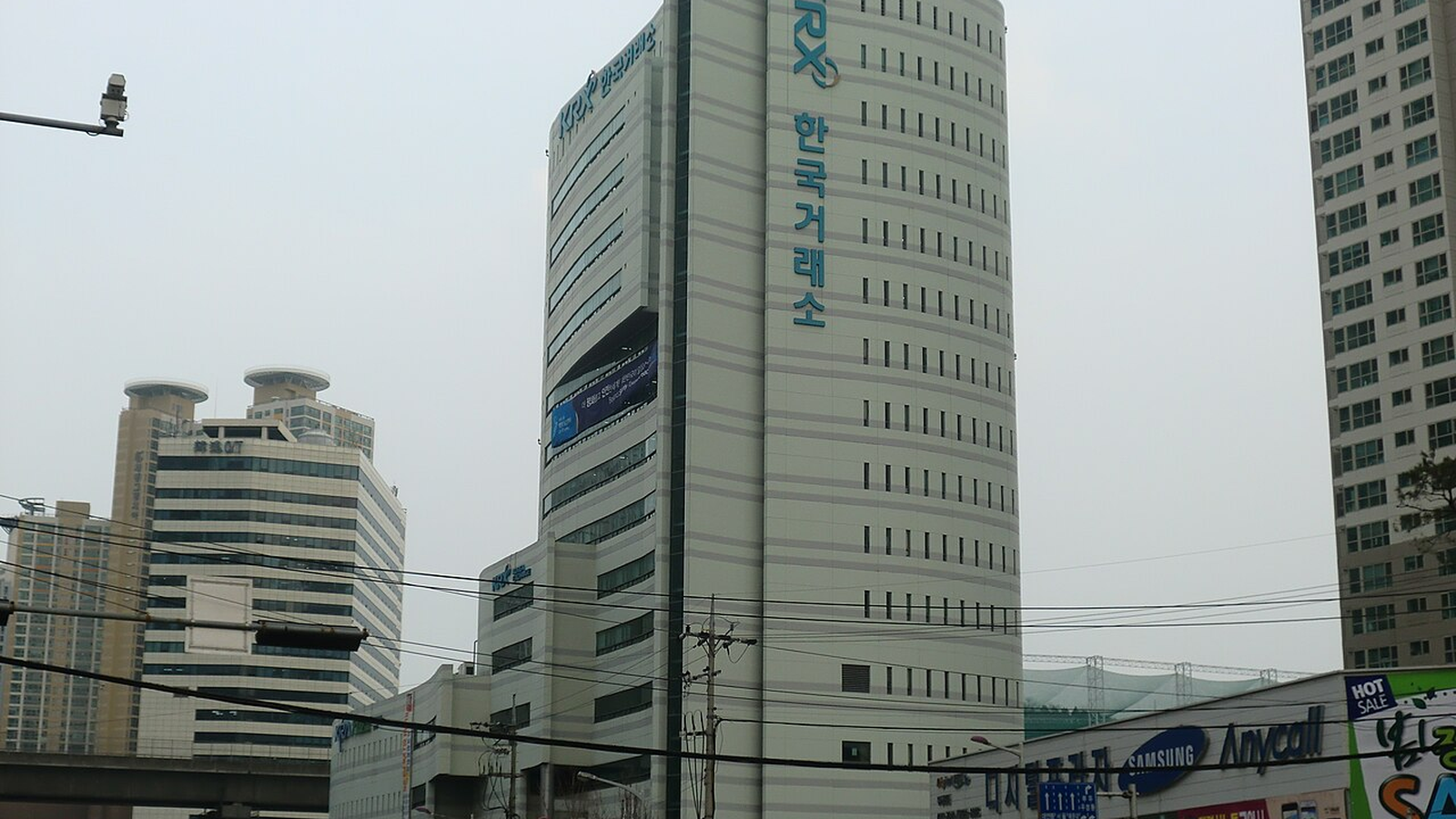
South Korea's KOSPI fell 267.93 points, or 5.21%, to 4,869.96 on Friday, Nov 20, its lowest close since Jan 16 (4,840.74), about 10 months ago. Chip stocks led the drop after a broad sell-off on Wall Street the night before and an allegation that AMD breached US export controls on China. Samsung Electronics fell 7.01% and SK hynix 5.92%. The KOSDAQ lost 5.71% to 645.68, and sell sidecars were triggered on both boards.
Key takeaways
- The KOSPI closed at 4,869.96, down 5.21%, and the KOSDAQ at 645.68, down 5.71%. The KOSPI is back below 5,000 for the first time in three sessions.
- On the KOSPI, foreign investors net sold 1.132 trillion won and institutions 951.3 billion won, while individuals net bought 1.595 trillion won. Foreign net selling ran to a sixth straight session.
- Sell sidecars were triggered at 11:54 a.m. on the KOSPI and around 1:28 p.m. on the KOSDAQ (KST), the first same-day trigger on both boards since Nov 6, 10 sessions ago.
- Among large caps, Samsung Electro-Mechanics fell 12.54%, SK Square 8.39% and Samsung Electronics 7.01%.
- The won weakened 6.2 won to 1,336.2 per dollar at the 3:30 p.m. daytime close.
KOSPI and KOSDAQ close and investor flows
The KOSPI opened 4.08% lower at 4,928.51 and touched 4,831.69 in the afternoon. The KOSDAQ opened 3.48% lower at 660.98. On the main board 88 stocks rose and 808 fell; on the KOSDAQ 194 rose and 1,509 fell.
Korean markets report flows in units of 100 million won (억원), so -11,320 means 1.132 trillion won of net selling. Foreigners and institutions together net sold 2.0833 trillion won on the KOSPI. Program trading was a net 1.3626 trillion won of selling. Early tallies right after the close differed slightly between outlets; the table uses the closing figures that several outlets reported in common.
Sell sidecars on both boards
The Korea Exchange triggered a sell sidecar on the main board at 11:54 a.m. KST, after KOSPI 200 futures fell 40.16 points, or 5.04%, to 755.84. A sidecar suspends program-trading sell orders for five minutes.
On the KOSDAQ, a sell sidecar followed at about 1:28 p.m., with KOSDAQ 150 futures down 6.04% and the cash index down 5.62%. It was the 31st KOSPI sell sidecar this year and the 18th on the KOSDAQ.
Why the market fell: Wall Street chip losses and the AMD allegation
On Thursday, Nov 19 (ET), the S&P 500 fell 2.02% to 7,175.83, the Nasdaq Composite fell 2.25% to 23,879.20 and the Dow Jones Industrial Average fell 2.19% to 49,097.06. The Philadelphia Semiconductor Index lost 2.42%. Our US market close for Nov 19 covers that session.
Anthropic listed on the Nasdaq that day and closed its first session at $97.17, 17.1% above its $83 offer price. AMD fell 7.7% and Nvidia 3.3%. Short seller Hunterbrook reported that IEIT Systems, a Chinese server maker on a US Commerce Department sanctions list, had updated AMD firmware at least six times. AMD denied the allegation.
Lee Kyung-min, an analyst at Daishin Securities, said the allegation that a US chipmaker breached China export controls spread concern about tighter regulation across the whole sector and pushed the market lower. Han Ji-young of Kiwoom Securities said the main cause was that market participants' willingness to buy was weakening. Separately, the Financial Times reported that Samsung Electronics and TSMC had suspended some chip shipments to Chinese customers under new US export controls.
Chip large caps and sectors
Samsung Electronics closed down 7.01% at 183,100 won after touching 181,400 won. SK hynix closed down 5.92% at 1,113,000 won; it was down more than 7% early and recovered part of the loss. Samsung Electronics preferred shares fell 8.38% and SK Square 8.39%.
Samsung Electro-Mechanics had the largest drop among the biggest KOSPI stocks, down 12.54%. It had gained about 17% over the previous two sessions on news that it was expanding its cooperation with Nvidia into multilayer ceramic capacitors (MLCC). No company-specific reason was reported for Friday's fall; the stock moved with the broad selling in chip and AI names.
IT hardware and power-equipment stocks were also weak. LG Innotek fell 8.70%, LS ELECTRIC 9.19%, HD Hyundai Electric 6.98% and Hyosung Heavy Industries 6.51%. Hyundai Motor lost 4.67% and Samsung Life Insurance 6.46%. Smaller declines came in KB Financial (-0.33%), LG Energy Solution (-0.83%), Celltrion (-0.93%) and Samsung Biologics (-1.45%).
| Stock | Market | Close change | Note |
|---|---|---|---|
| Samsung Electronics005930 | KOSPI | -7.01% | 183,100 won; intraday low 181,400 won |
| SK hynix000660 | KOSPI | -5.92% | 1,113,000 won |
| Samsung Electronics Pref005935 | KOSPI | -8.38% | Preferred shares |
| SK Square402340 | KOSPI | -8.39% | Large cap |
| Samsung Electro-Mechanics009150 | KOSPI | -12.54% | Up about 17% over the prior 2 sessions |
| LG Innotek011070 | KOSPI | -8.70% | IT hardware |
| LS ELECTRIC010120 | KOSPI | -9.19% | Power equipment |
| HD Hyundai Electric267260 | KOSPI | -6.98% | Power equipment |
| Hyundai Motor005380 | KOSPI | -4.67% | |
| Alteogen196170 | KOSDAQ | +0.98% | Rose among KOSDAQ large caps |


KOSDAQ: double-digit drops in chip equipment and parts
Chip equipment and parts makers took the heaviest losses on the KOSDAQ. Leeno Industrial fell 15.07%, Wonik IPS 14.47%, EO Technics 14.03%, Simmtech 11.61% and Jusung Engineering 9.31%. Battery-materials makers EcoPro and EcoPro BM fell 5.92% and 4.61%, while Rainbow Robotics lost 4.11% and Robotis 8.07%. Among KOSDAQ large caps, Alteogen rose 0.98% to 174,400 won.
Won at 1,336.2 per dollar, first rise in three days
The won weakened 6.2 won, or 0.47%, to 1,336.2 per dollar at the 3:30 p.m. daytime close, after reaching 1,340.3 during the session. Etoday reported that risk aversion was strong as stocks fell at home and abroad. At the same time, the dollar traded at 159.10 yen and the dollar index stood at 103.71.
Asian markets and daytime international news
Markets across Asia fell. Japan's Nikkei 225 dropped 5.06% to 56,436.65, below 57,000 for the first time in seven months. Taiwan's Taiex fell 6.63% to 35,877.63, with TSMC down 4.76%. The Shanghai Composite lost 1.22% to 3,533.79. Hong Kong's Hang Seng was down about 2.2% roughly 30 minutes before its close.
Several data releases came out during Asian hours. Japan's October national CPI excluding fresh food rose 2.2% from a year earlier, below the 2.3% forecast. The People's Bank of China held its one-year loan prime rate at 3.00% and the five-year rate at 3.50%.
In the US, Philadelphia Fed President Anna Paulson said the Fed has more tightening to do. Around 2:20 p.m. KST, S&P 500 futures were down 0.6% and Nasdaq 100 futures down 1.1%.
What to watch next
- Monday, Nov 23: Japanese markets are closed for a public holiday.
- Thursday, Nov 26: the Bank of Korea's Monetary Policy Board holds its last rate decision of the year. The base rate is currently 3.00%.
- Dec 17-18: the Bank of Japan's monetary policy meeting.
For earlier moves this week, see the Nov 17 KOSPI close, when the index first fell below 5,000, and the Nov 19 KOSPI close, when it rebounded.
FAQ
Where did the KOSPI close on Nov 20, 2026?
The KOSPI closed at 4,869.96, down 267.93 points or 5.21%, its lowest close since Jan 16 (4,840.74), about 10 months earlier. The KOSDAQ closed at 645.68, down 39.13 points or 5.71%.
Why did Korean stocks fall so much on Nov 20?
The Nasdaq fell 2.25% and the Philadelphia Semiconductor Index 2.42% on Nov 19 (ET), and an allegation that AMD breached US export controls on China turned into wider concern about regulation of the chip sector. Daishin Securities analyst Lee Kyung-min said that concern pushed the market lower.
When were the sell sidecars triggered?
A sell sidecar was triggered on the KOSPI at 11:54 a.m. KST and on the KOSDAQ at about 1:28 p.m., each suspending program-trading sell orders for five minutes. It was the first time both boards triggered one on the same day since Nov 6.
How much did foreign investors sell?
Foreign investors net sold 1.132 trillion won of KOSPI shares, their sixth straight session of net selling. Institutions net sold 951.3 billion won and individuals net bought 1.595 trillion won.
Why did Samsung Electro-Mechanics fall more than 12%?
Samsung Electro-Mechanics fell 12.54%. It had risen about 17% over the previous two sessions on news of wider MLCC cooperation with Nvidia, then fell with the broad selling in chip and AI stocks. No company-specific reason for the drop was reported.
Sources
- Hankyung: KOSPI closes at 4,869, sell sidecars on both markets
- Seoul Economic Daily: KOSPI and KOSDAQ fall more than 5%
- iNews24: KOSPI at 10-month low
- Ziksir: KOSPI down 5%, sidecars on both boards
- SmartBiz: KOSPI closes in the 4,860s on US chip export concerns
- License News: KOSPI closes at 4,869.96
- Newspim: KOSPI falls to 10-month low
- Newspim: Asian markets fall on AMD news
- Seoul Shinmun: Samsung Electro-Mechanics down 12%
- Etoday: Won weakens as stocks plunge
- SBS: Samsung Electronics and SK Hynix fall as foreigners and institutions sell
- SBS: Won-dollar rate rises 6.2 won to 1,336.2
- Money Today via Supple: Nikkei down 5.06%, Taiwan down 6.63%
- AP via ABC News: Asia shares drop on AI worries
- FXStreet: No relief seen for AI or chip trades ahead of the weekend
- investingLive: Asia-Pacific market news, Red Friday
- Point Daily: Bank of Korea rate decision on Nov 26